A newsletter dedicated not only to the latest news and price trends for agricultural commodities, but also to potential developments and changes in feed formulations for various livestock. The IDENA Formulation Team hopes you enjoy reading it!
Digestibility, fibre content, raw material costs, variability, carbon footprint… Palm kernel meal remains a strategic raw material, but one that is complex to incorporate into formulations.
Global trends: a dominant oil
Why has palm oil become so widespread?
But between economic opportunity and technical constraints, its use requires careful consideration
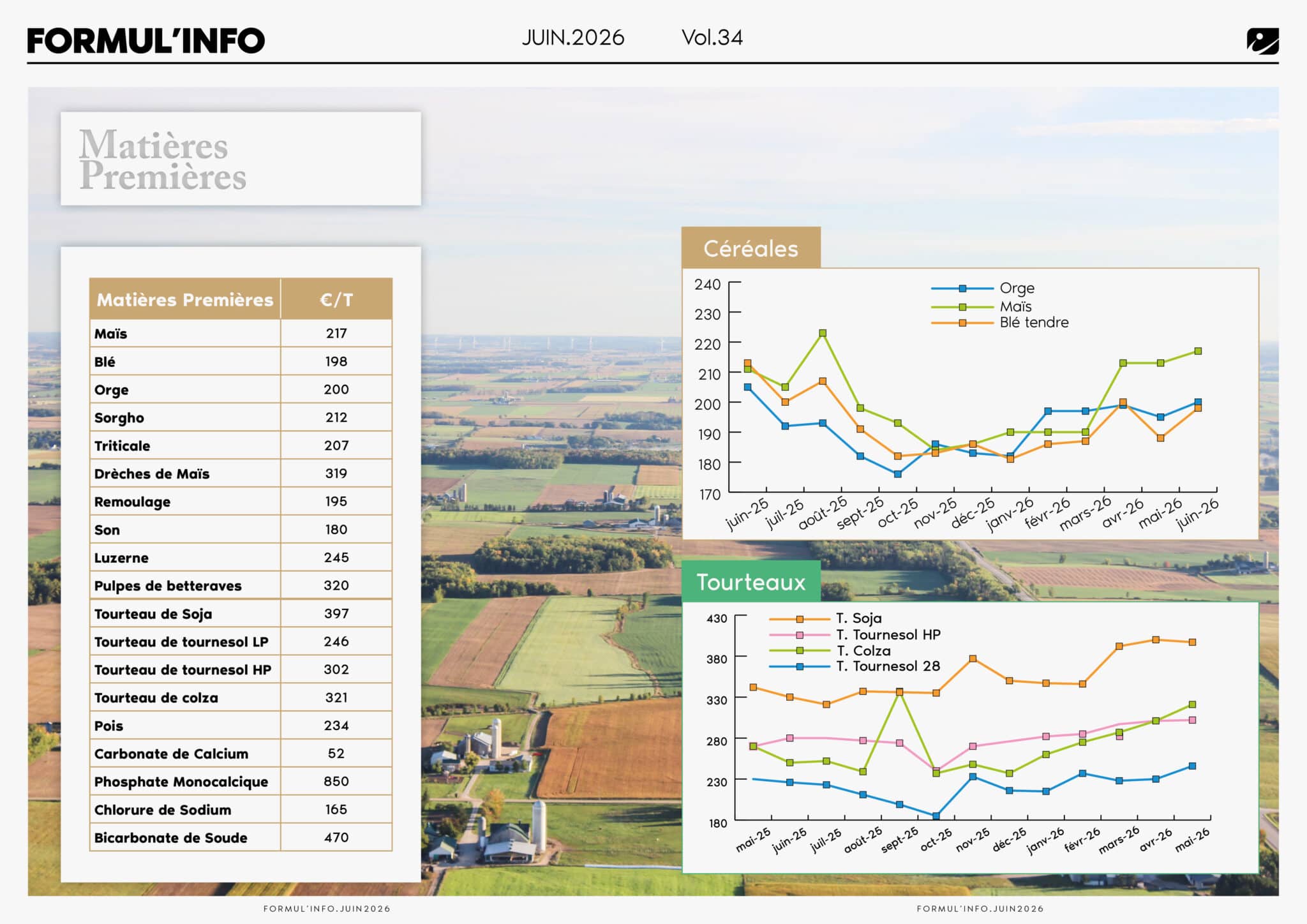
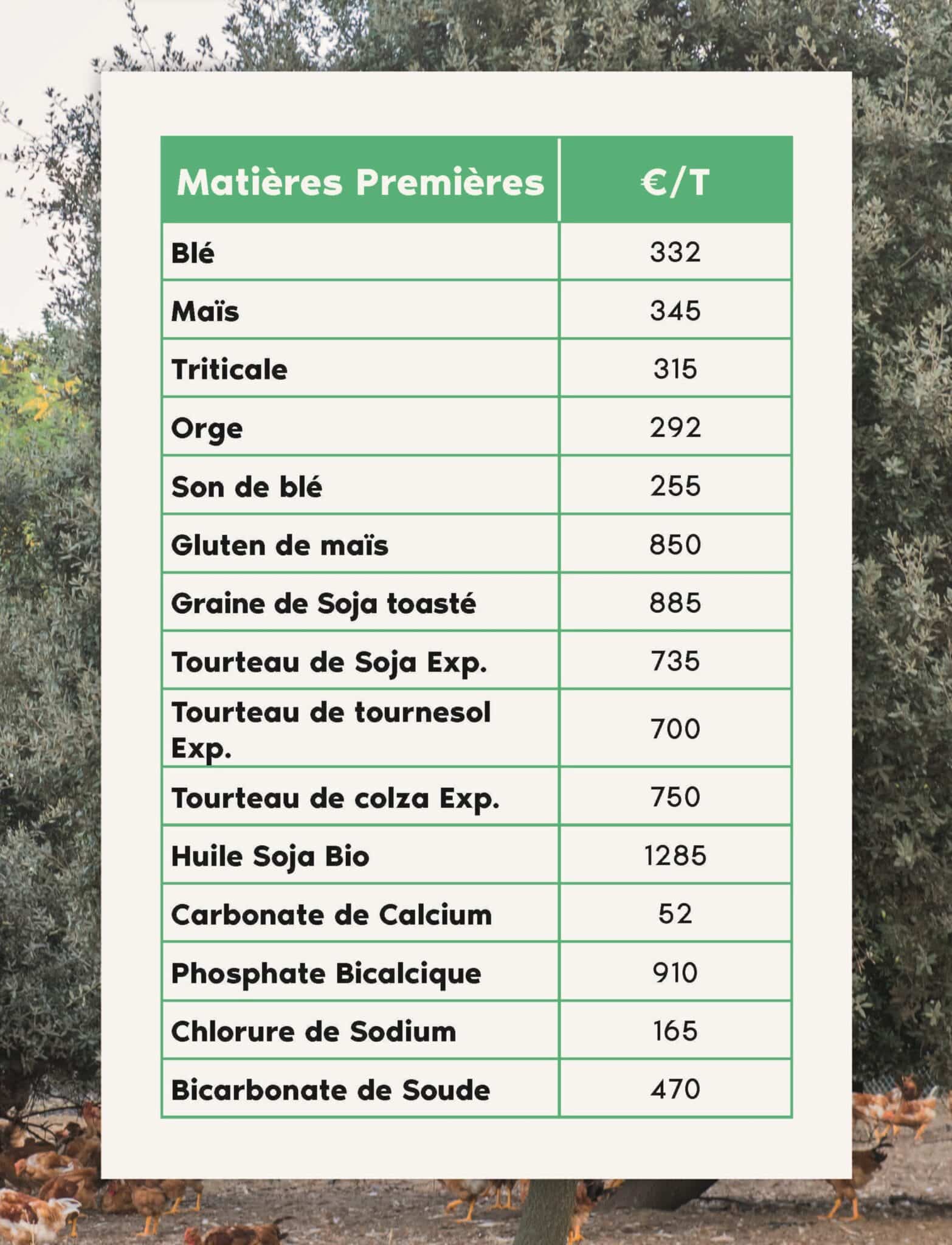
In June, there was an increase in cereal prices. Oilseed meal prices rose very slightly, except for soya and high-protein sunflower meal.
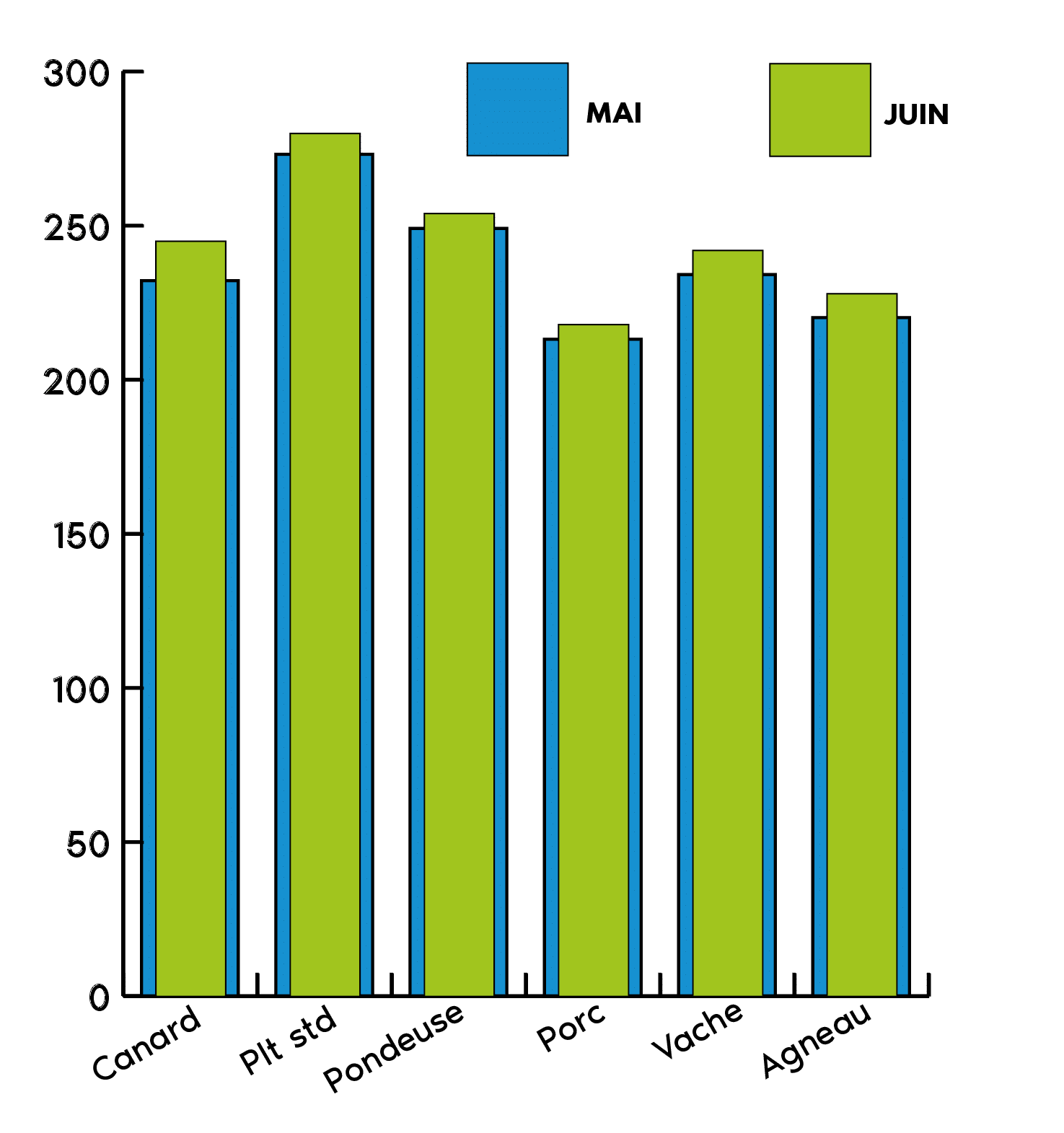
This month, we are seeing an upward trend in the cost of packages.
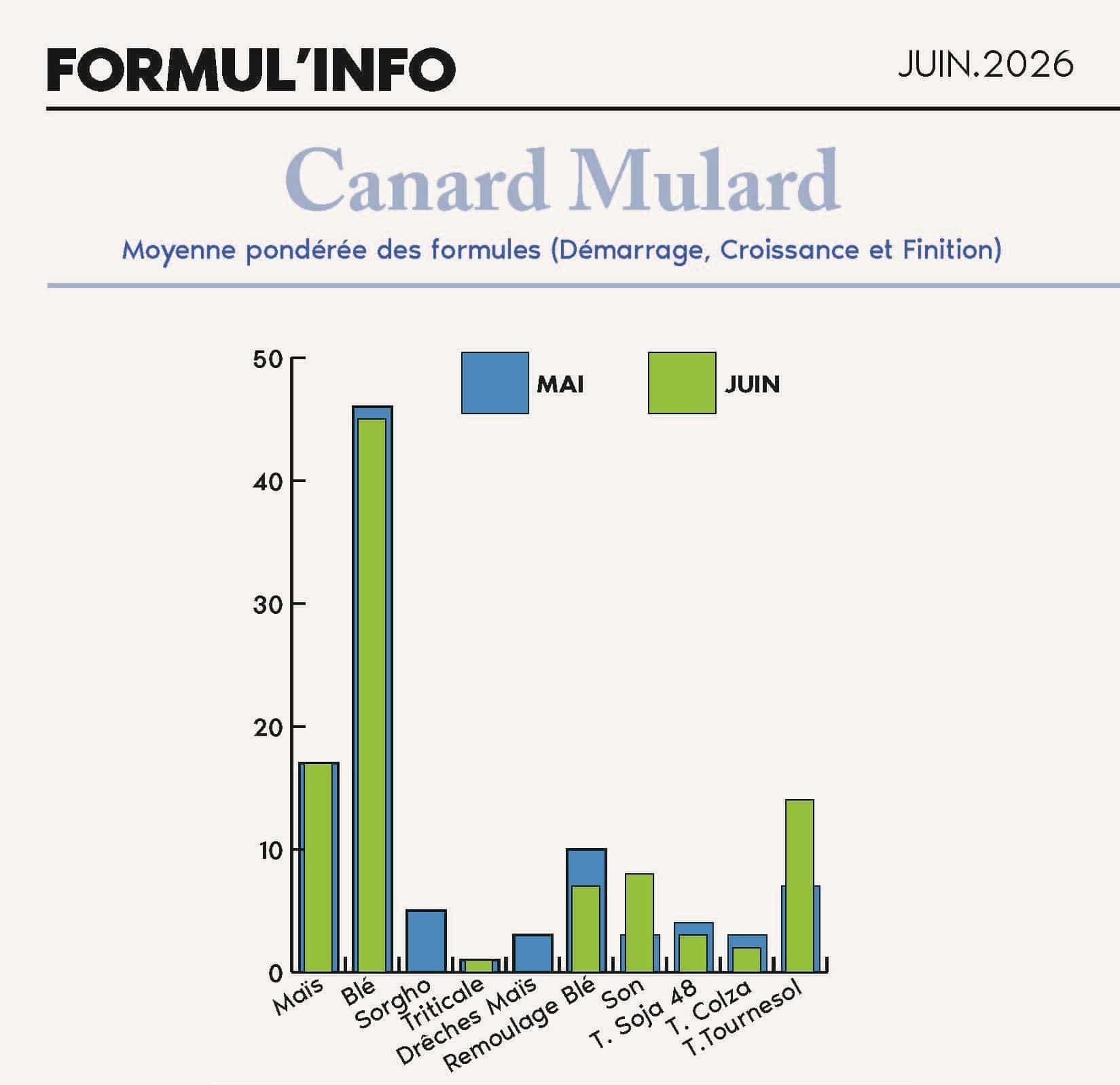
The protein feed mix is being adjusted to include more sunflower meal, which is partly replacing other oilseed meals and DDGS. This month, wheat by-products are balanced with equal amounts of bran and wheat middlings.
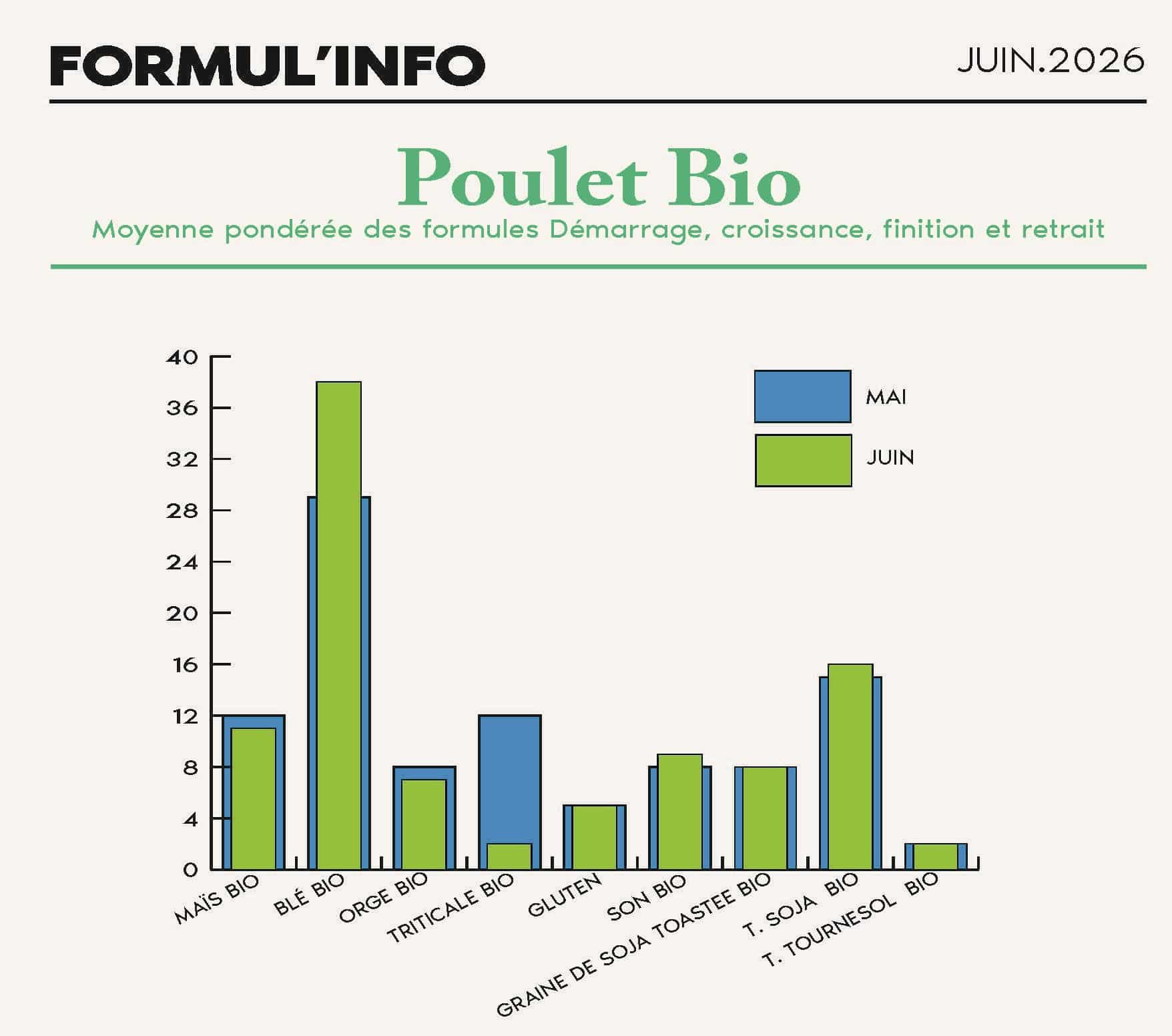
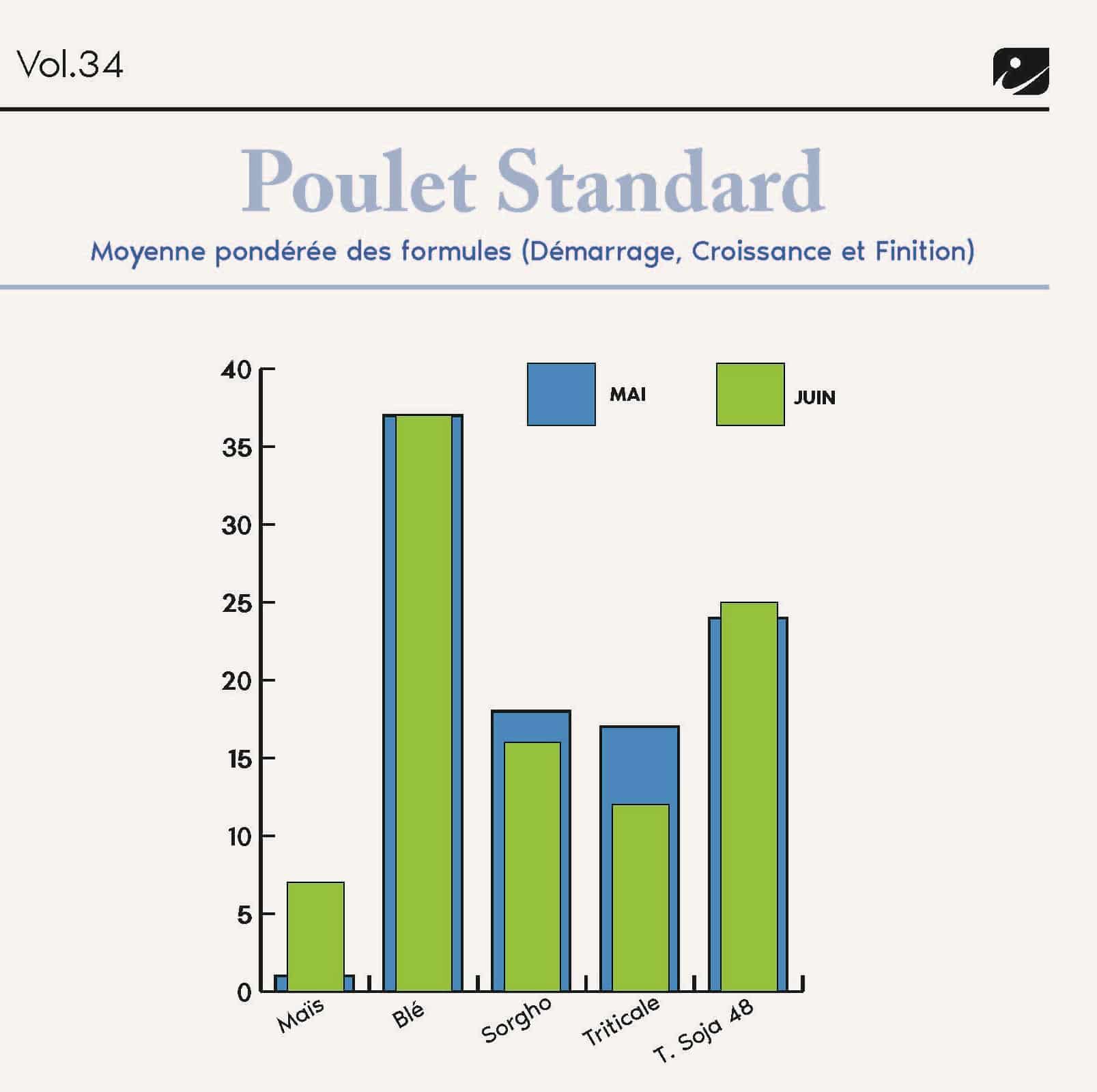
In June, triticale fell, making way for maize, which rose by 5%. The rest of the mix remained largely unchanged.
Sunflower meal is reduced in the formulation and replaced by soya meal. The loss in fibre content is offset by an increase in bran.
Pig:
Overall, the situation is similar to last month’s. There has been a slight fall in triticale prices, which has been offset by rises in barley and sorghum prices.
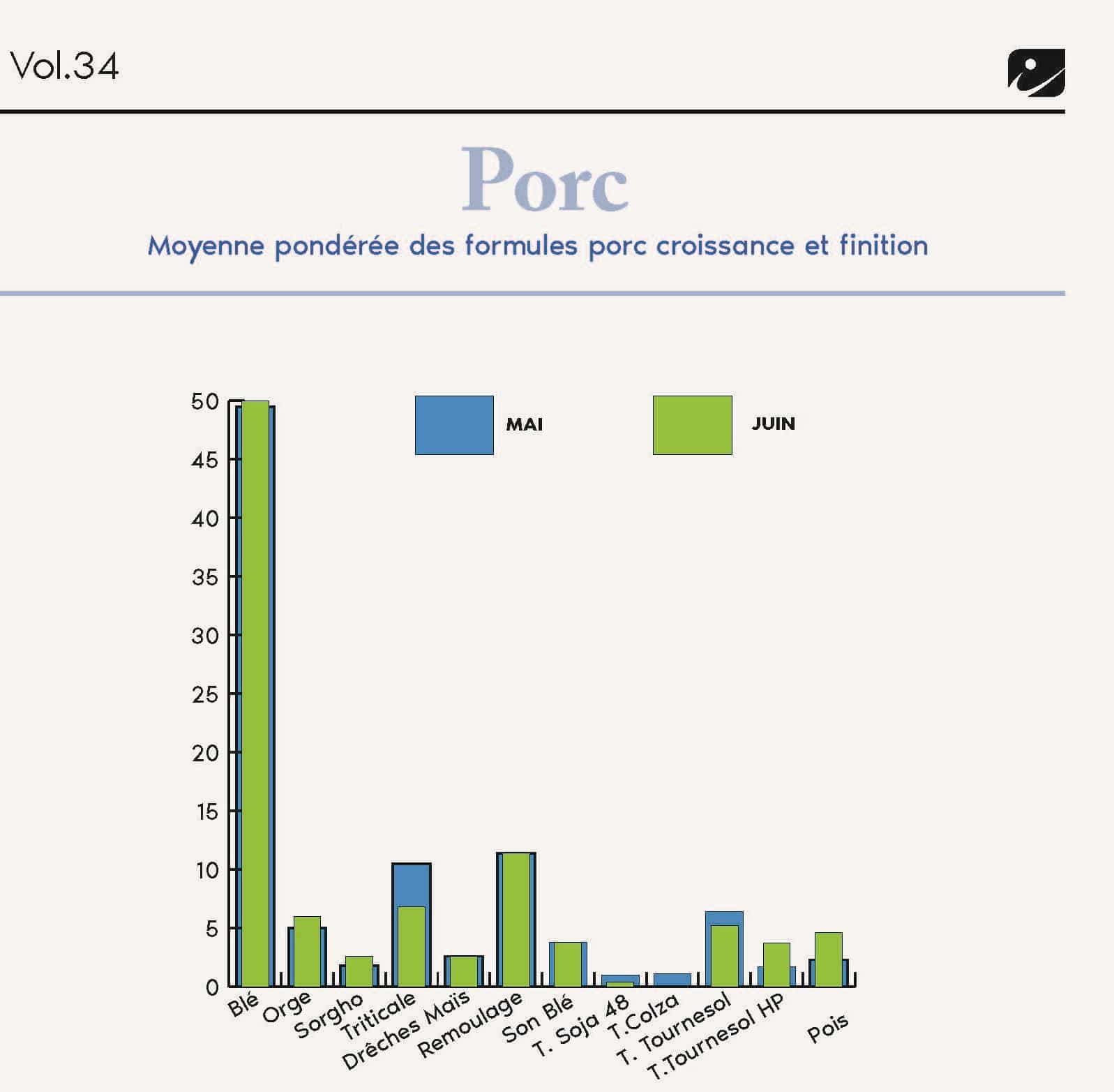
This month, sorghum and triticale are not worth considering. They have been replaced entirely by barley. The inclusion of DDGS offsets the decline in rapeseed meal.
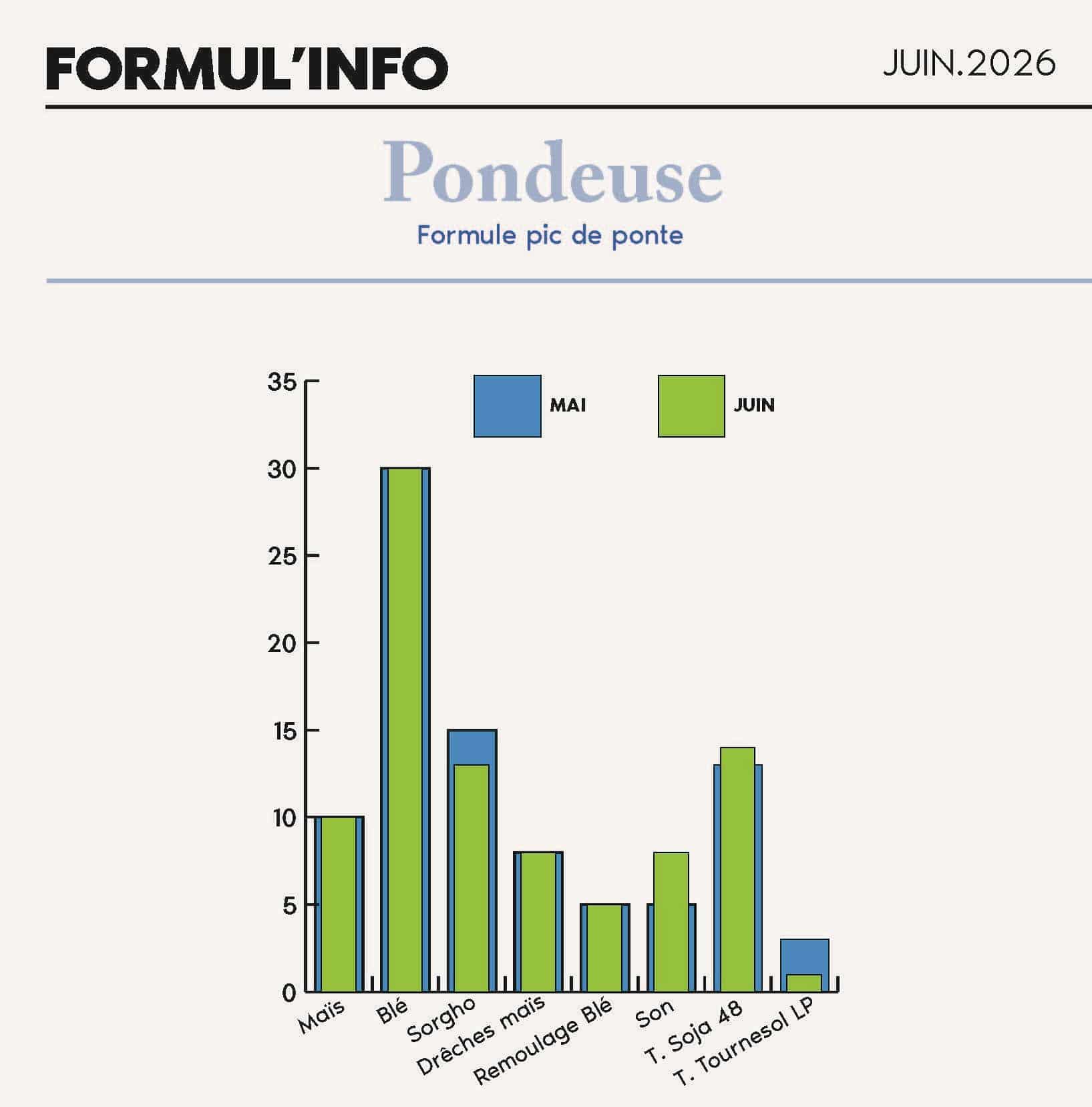
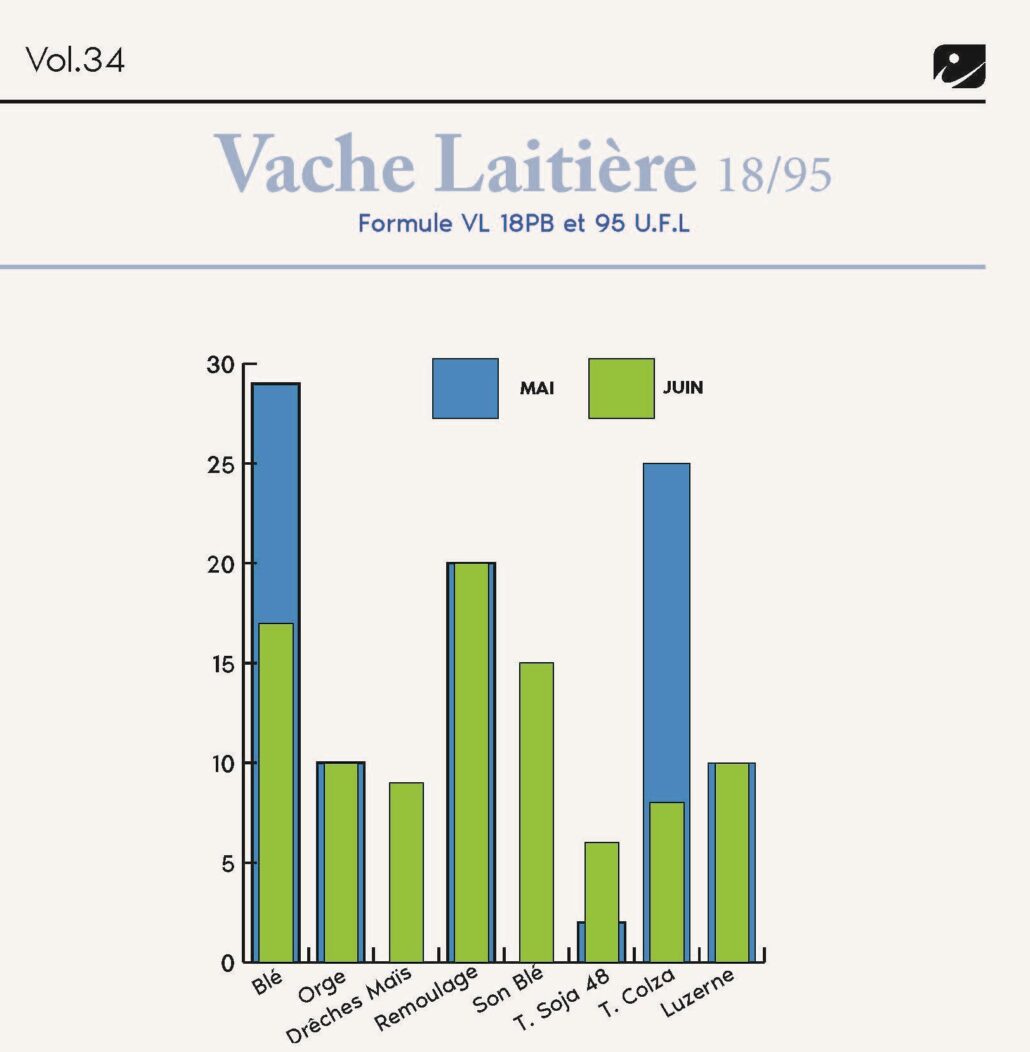
Rapeseed meal has fallen by 16%, making room for soya meal (+5%) and maize distiller’s grains, which are being included in the formulation at 9% this month. The reduction in wheat has allowed bran to be included in the formulation, thereby offsetting the loss of fibre resulting from the decline in rapeseed meal.
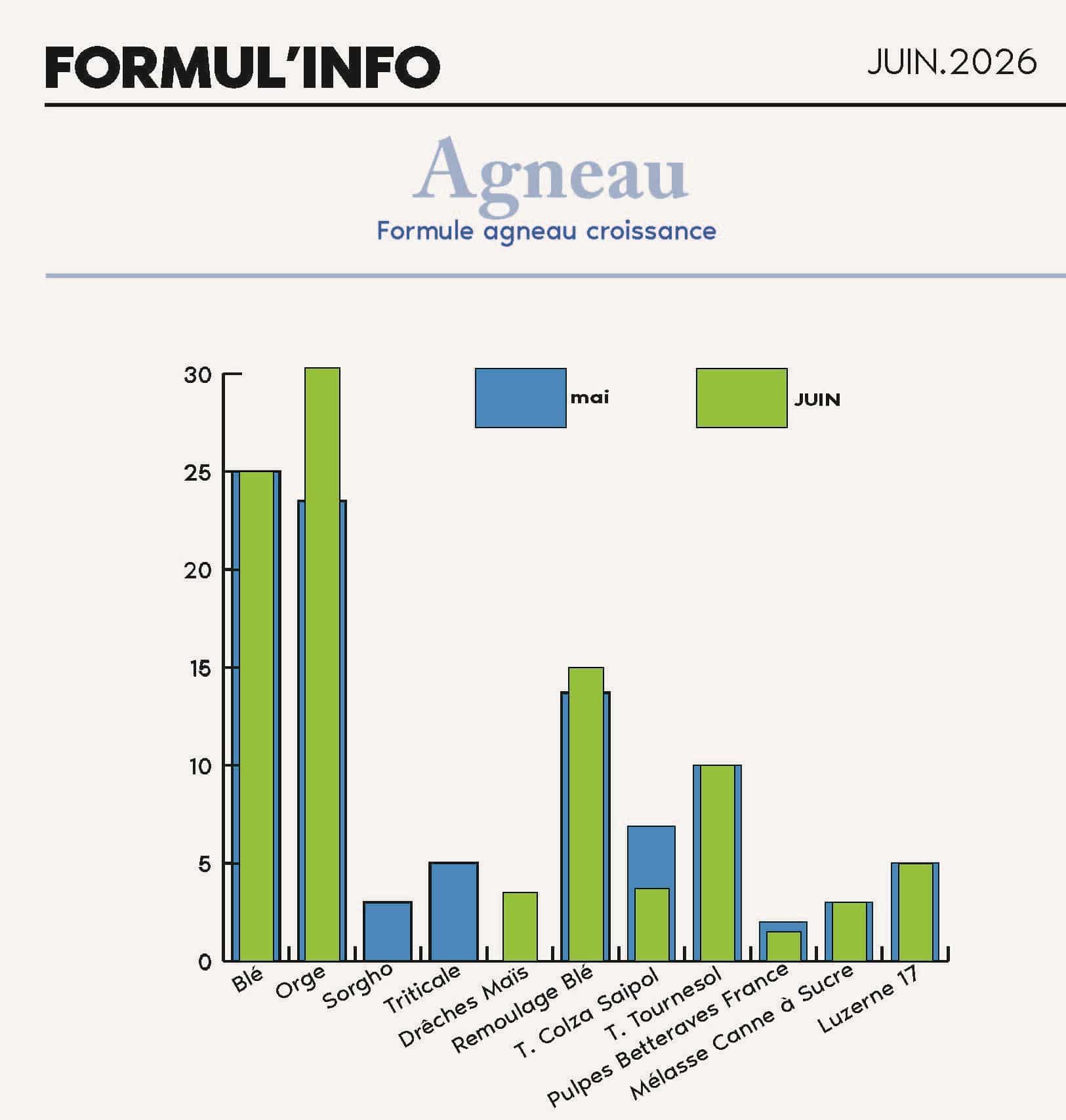
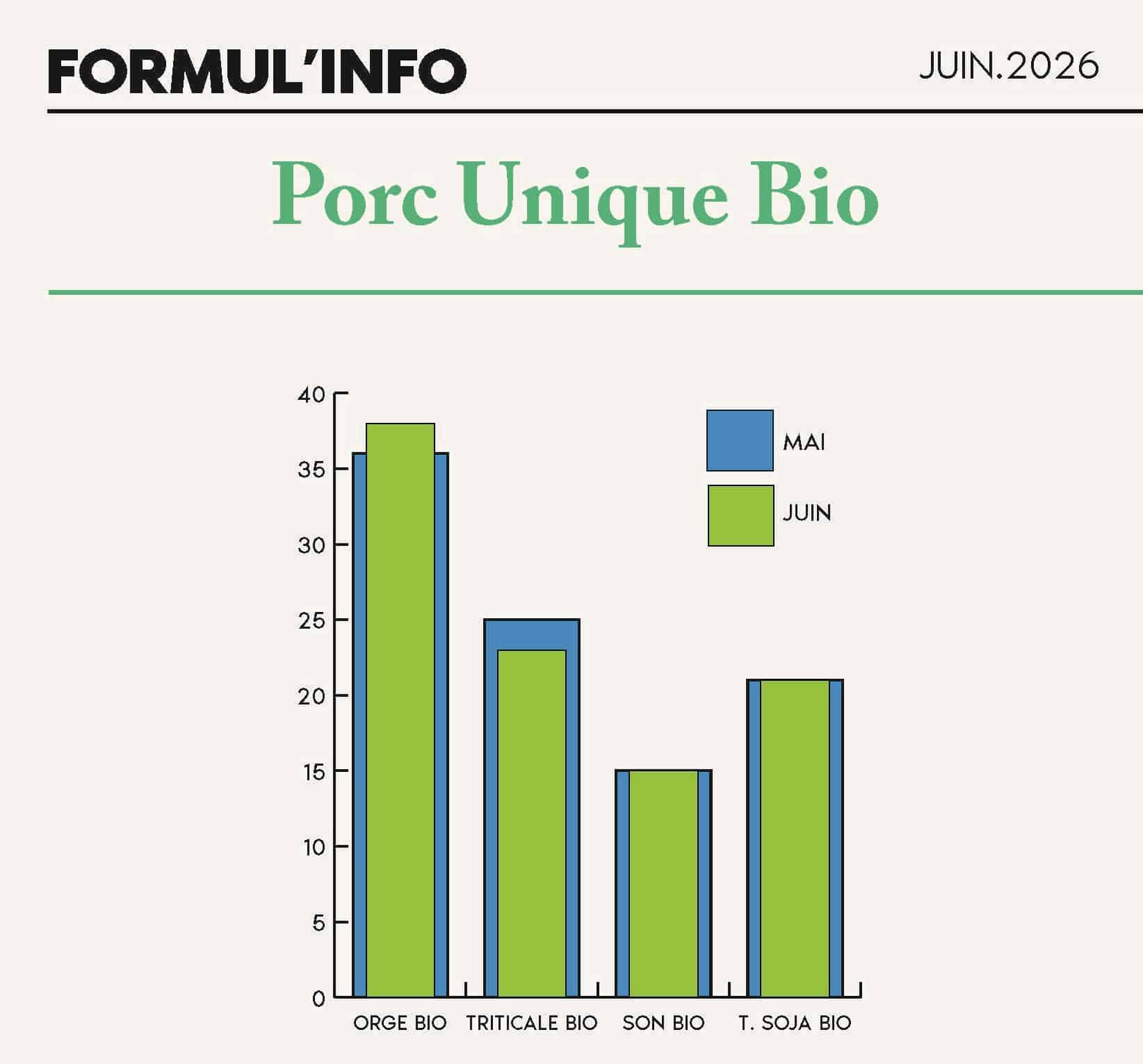
This month, there has been a slight shift of 2 percentage points between barley and triticale. The rest of the mix remains unchanged.
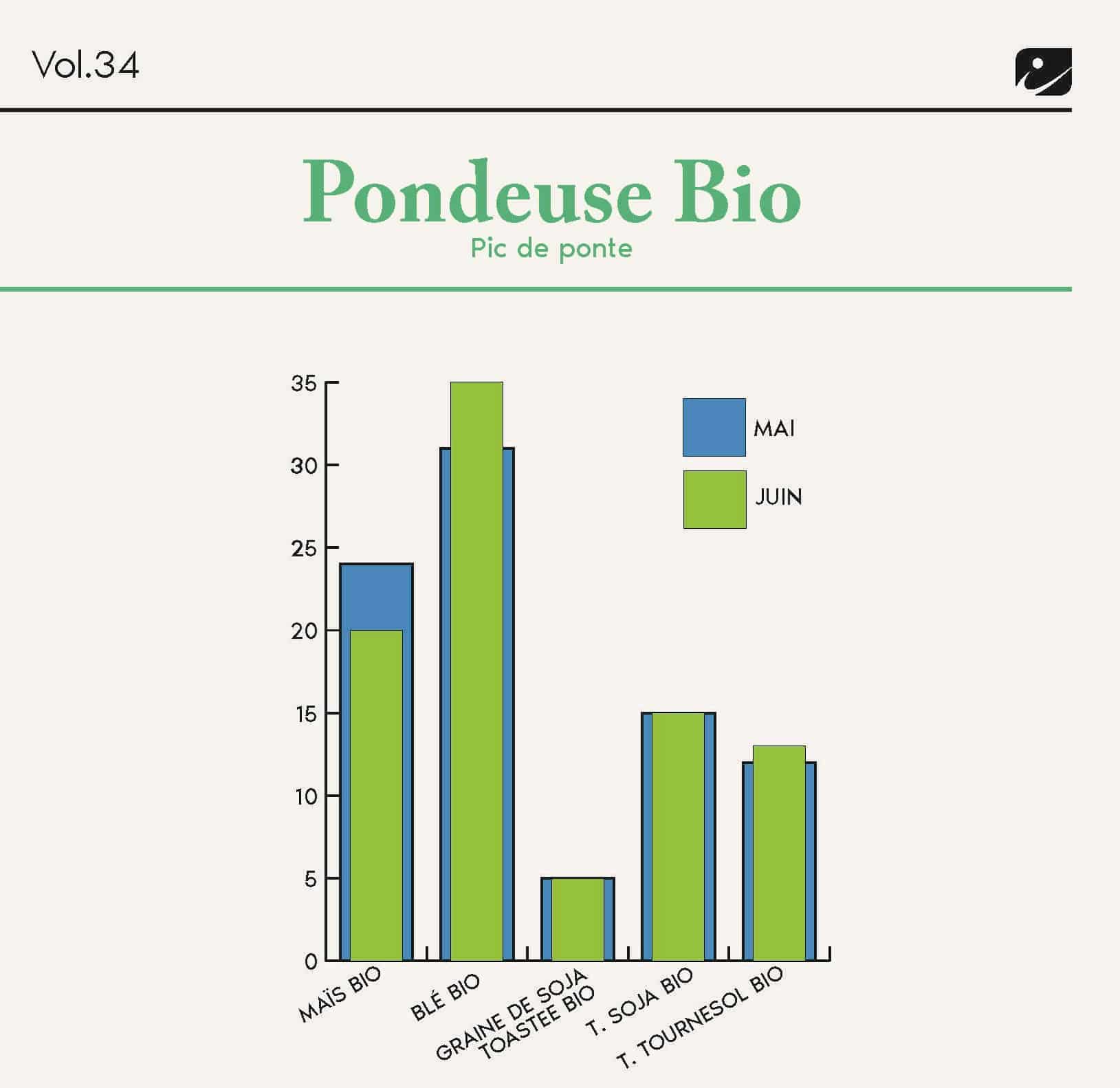
In June, the mix changes slightly compared with the previous three months. There is a shift of around 4% between wheat and maize. The rest of the mix remains unchanged.
Chicken:
This month, triticale prices have fallen by 10%. This fall is offset by the rise in wheat prices.