A newsletter dedicated not only to news and trends in agricultural commodity prices, but also to potential developments and changes in feed formulations for different livestock. The IDENA formulation team hopes you enjoy reading it!
After collecting samples of the new maize and sorghum harvest from IDENA’s French customers, we carried out qualitative analyses of the samples.
For both cereals, there is no significant difference between the nutritional analysis results for the 2024 and 2025 harvests. Unlike last year, mycotoxin contamination levels are low (Arvalis). Of the 19 samples analysed, only 4 exceeded IDENA’s recommendations for fumonisins.
The moisture content is around 14%, as it was last year. There has been a slight increase (0.3 points) in the average crude protein content (7%) and a 1-point decrease in starch (65%). The average xanthophyll content is 22 ppm, but the range of values is significant [17-28.2 ppm].
‘After the “acceleration” of 2024, 2025 marks a return to a more normal dynamic for spring crops: declining/stabilising barley acreage and mixed harvests depending on the region’ (France Agrimer).
Sorghum continues to position itself as a sustainable and economical crop, especially in the face of current climatic constraints.
Chemical analysis of IDENA samples from the new 2025 sorghum harvest showed that moisture content was lower (14.1%) than last year, as was starch content (63.9% vs. 65.5%). There was a slight increase (0.1%) in protein content (9.6%).
The analyses carried out indicate an average moisture content of 14.3%, an average protein content of 6.9% and an amide content of 64%.
In addition, Promate measurements were carried out on maize grains intended for animal feed in order to assess the intensity of the thermal shock suffered during drying.
This year, the average value observed is 39.4 (% albumin), which is above the recommended optimal range (25–35).
This indicator is essential for adjusting drying parameters to ensure optimal grain quality, combining good preservation, high digestibility and nutritional performance.
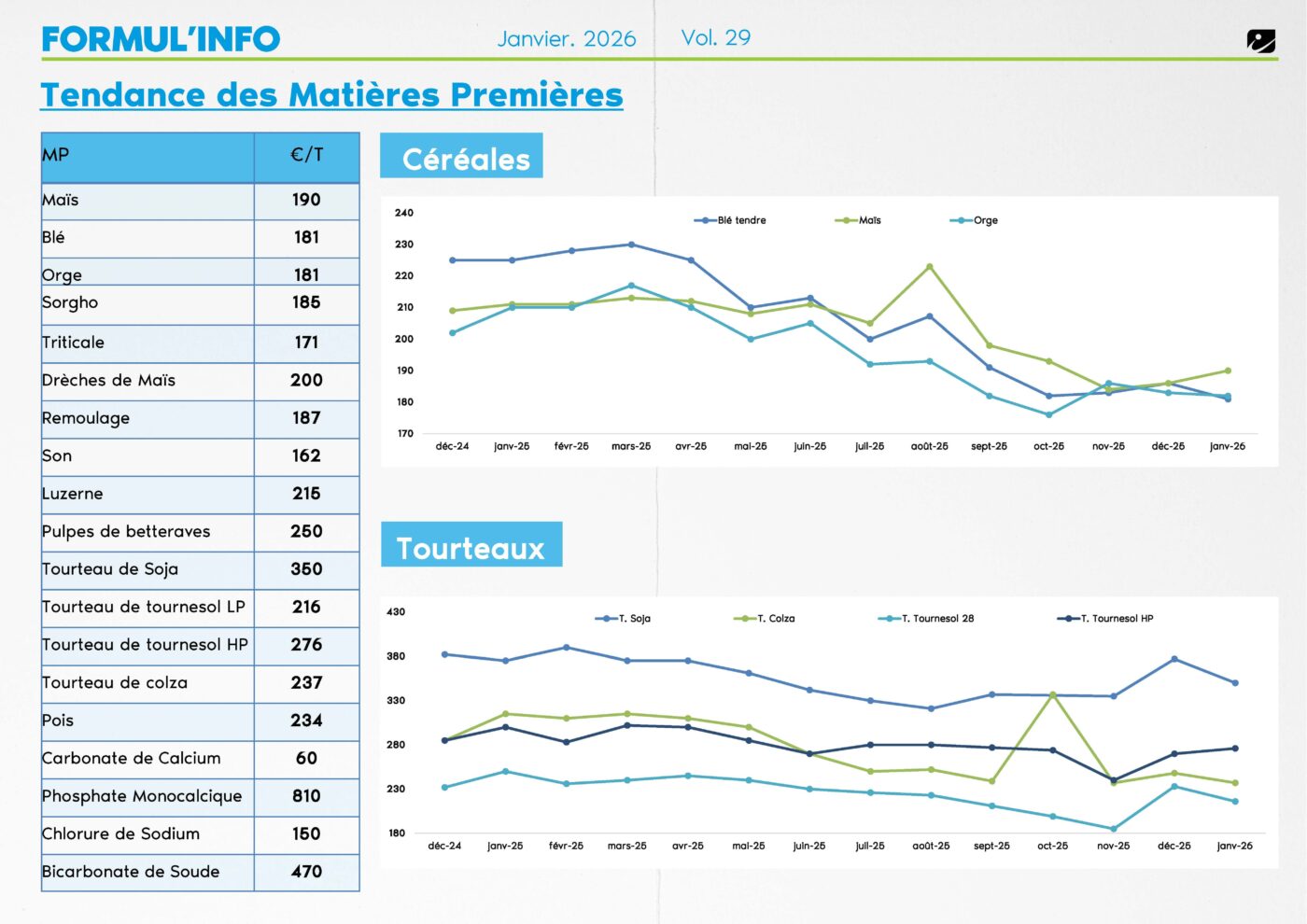
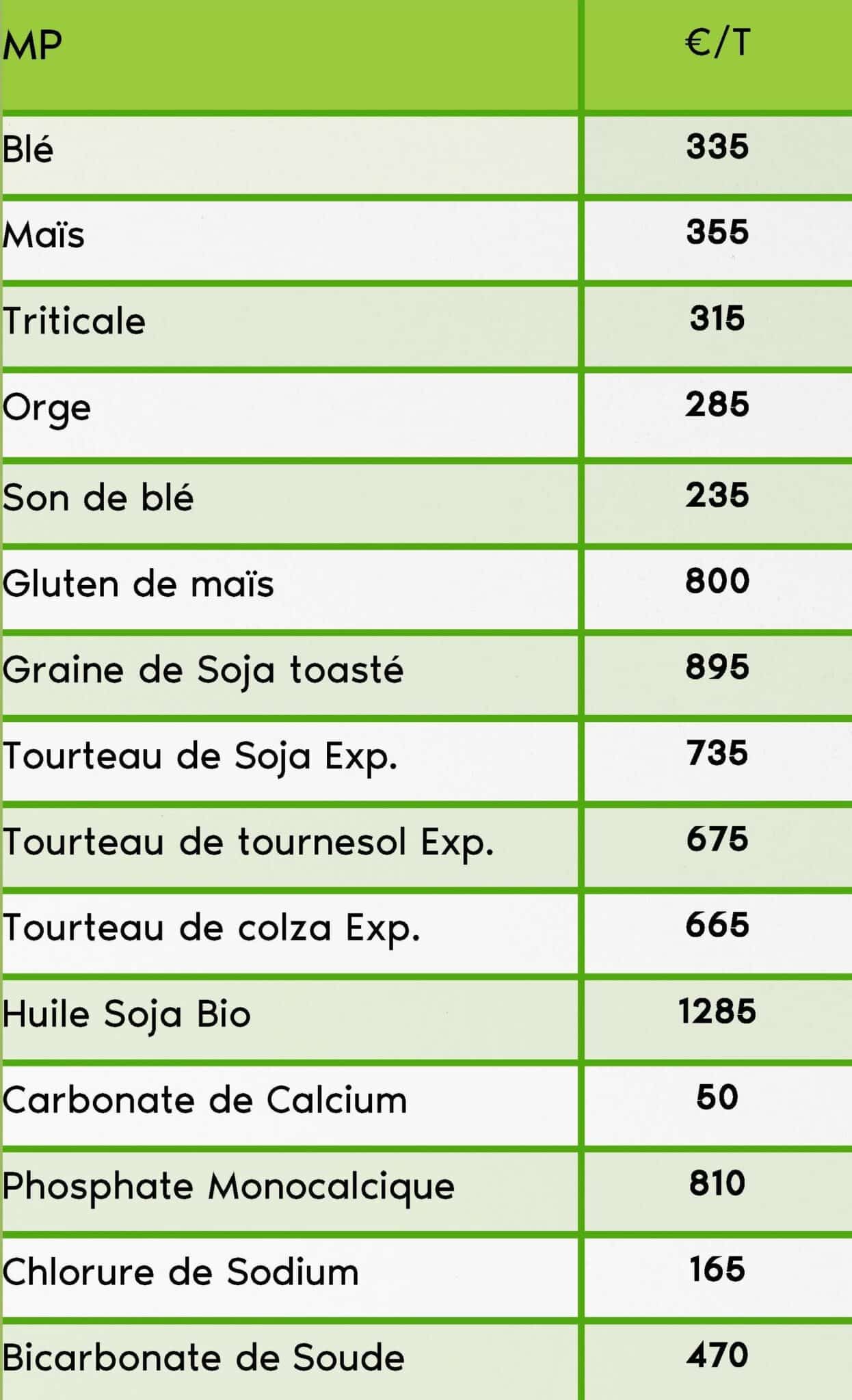
Cereal prices have remained relatively stable since the beginning of the year, with a slight increase for maize. Oilseed meal prices have remained fairly stable.
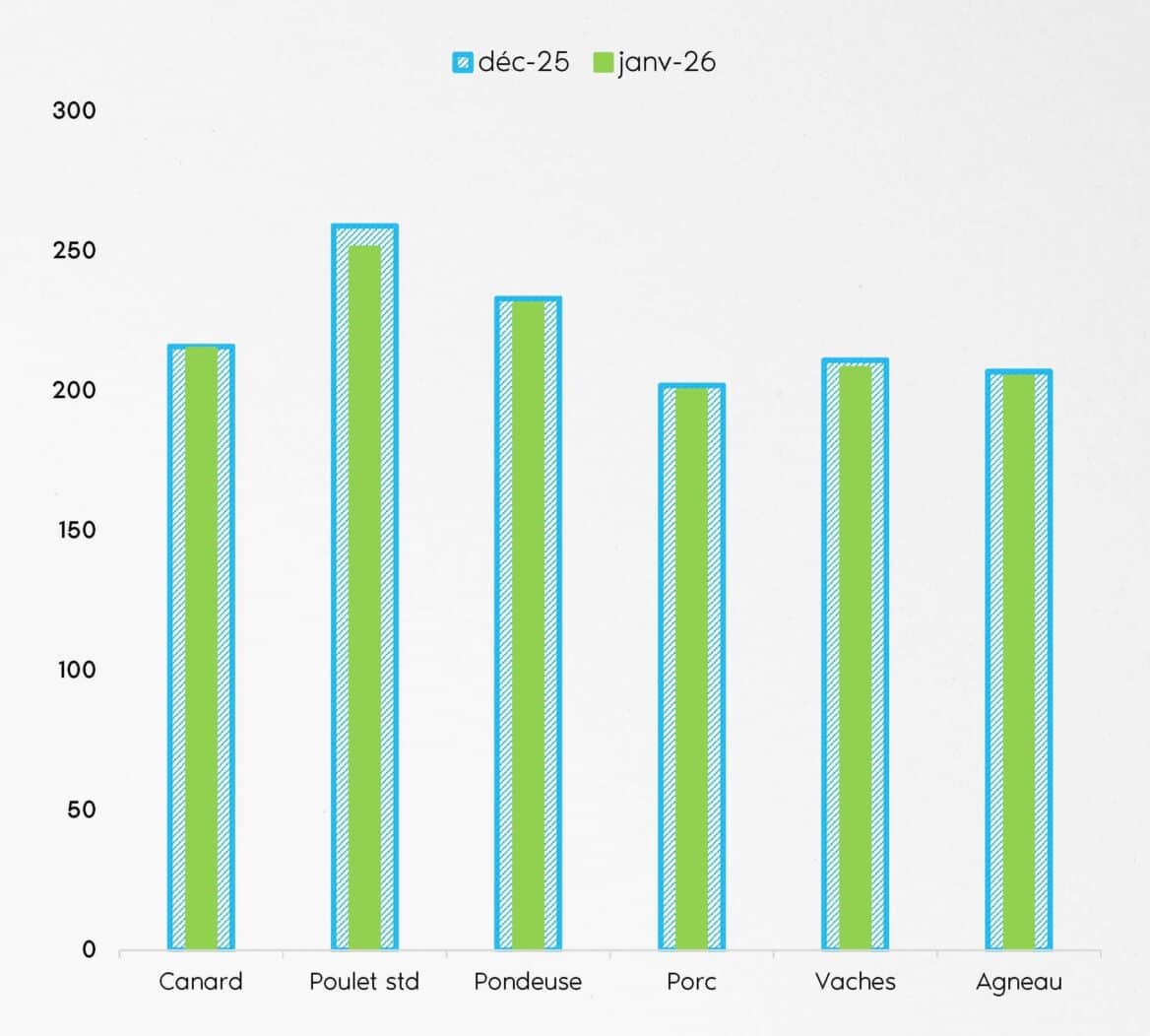
This month, there has been a downward trend in prices for monogastric and ruminant feed.
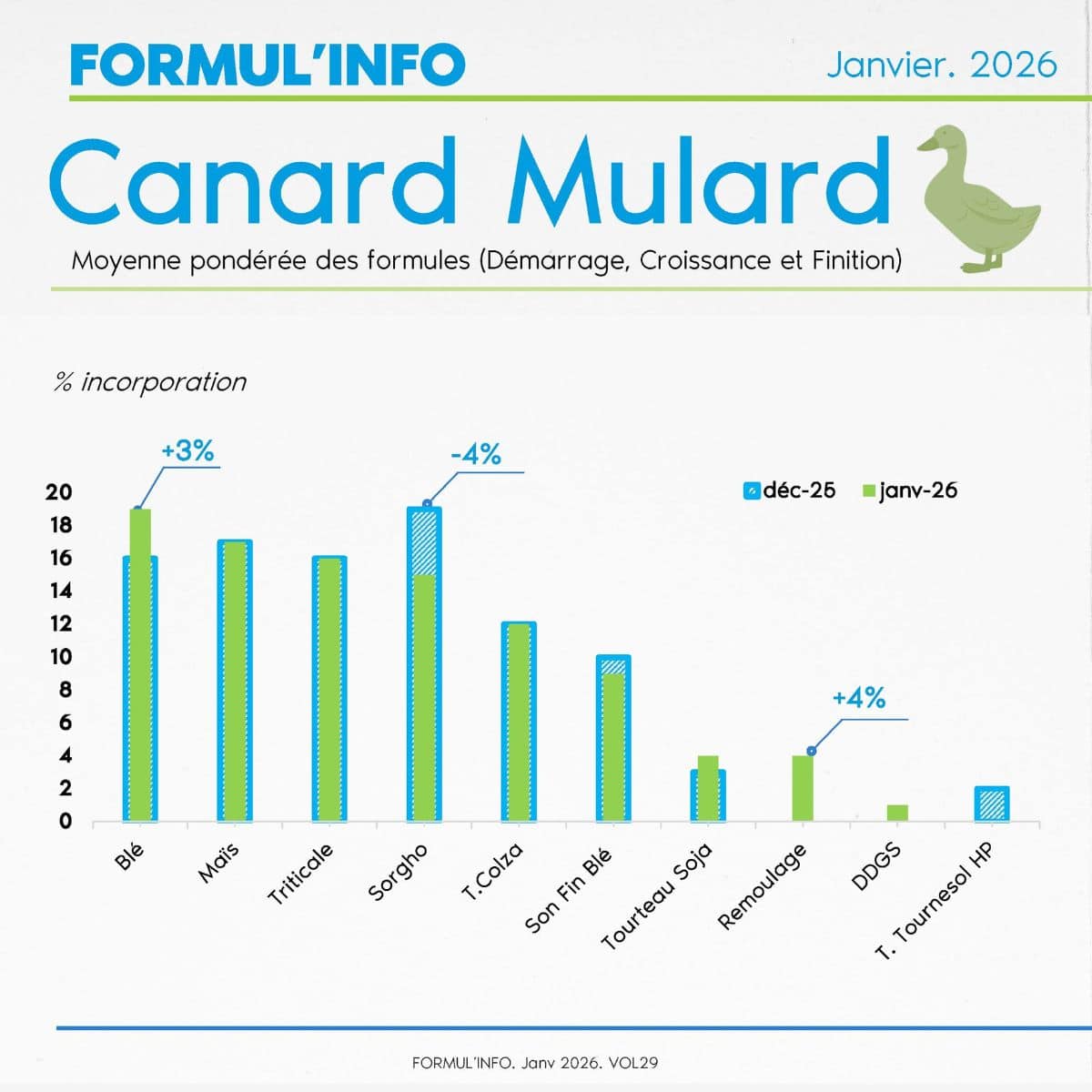
The cereal profile is similar to that of December. However, the protein raw material profile has changed. HP sunflower has been replaced by an increase in soya. The rise in cereal co-products has contributed to a slight decrease in phosphate incorporation.
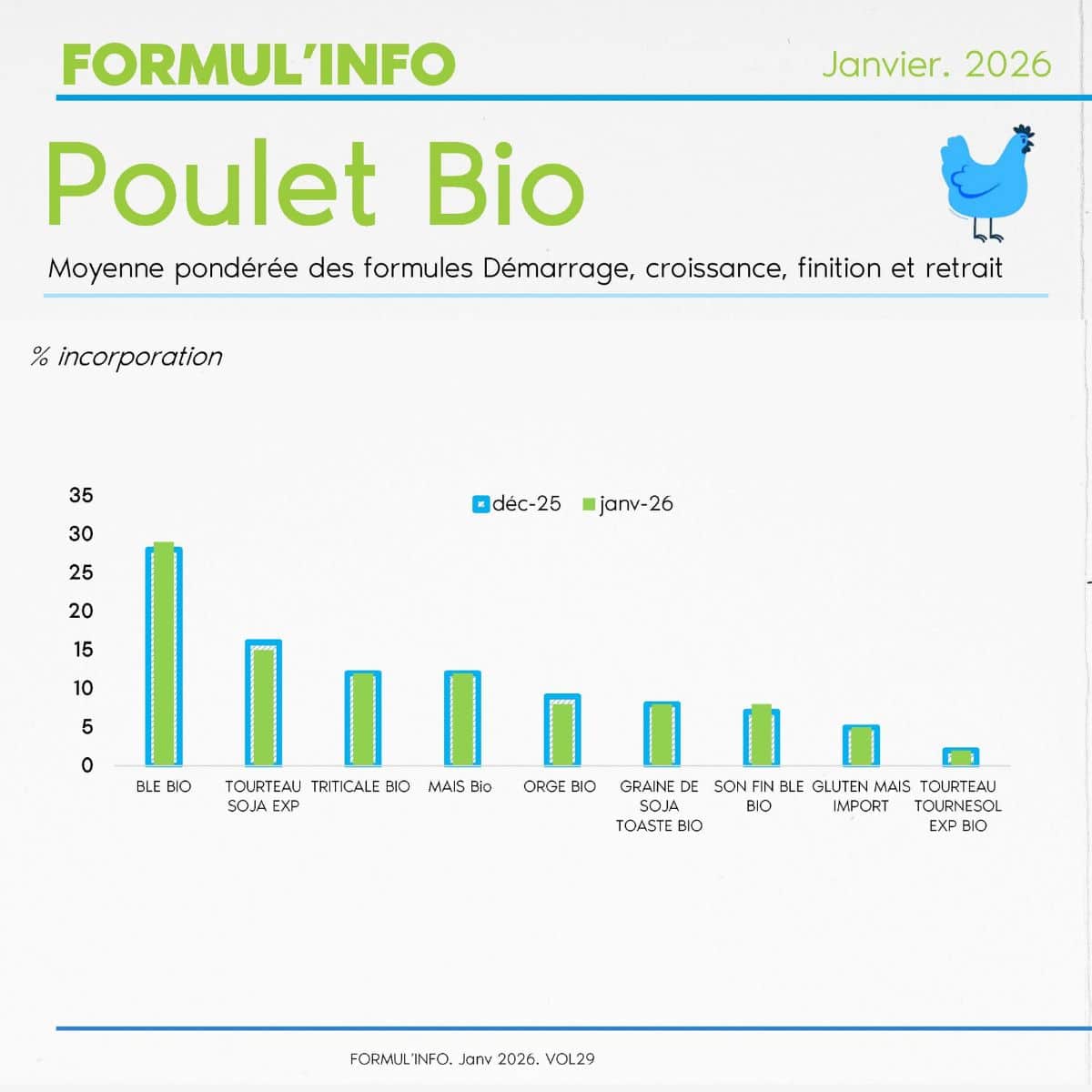
Formulas remain stable compared to December. There has only been a slight decrease in maize in favour of triticale.
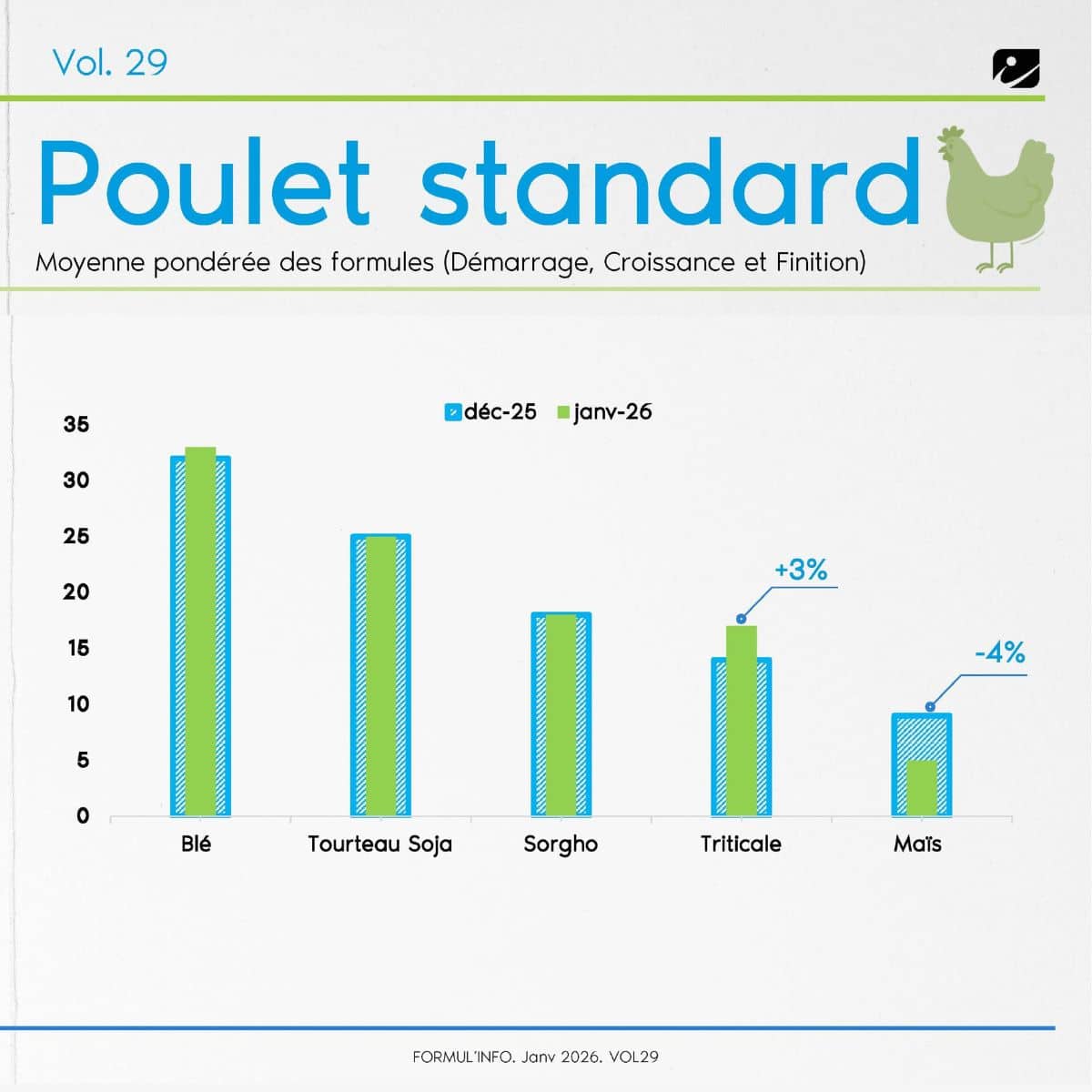
There has been a slight shift from wheat to triticale, but the formula profile remains relatively stable.
Overall, the formula has changed very little compared to last month. The cereal profile is similar to last month’s. Triticale and wheat remain the main sources of energy, and co-products (bran meal) and oilseed meal (rapeseed-soya) are used in similar quantities to December.
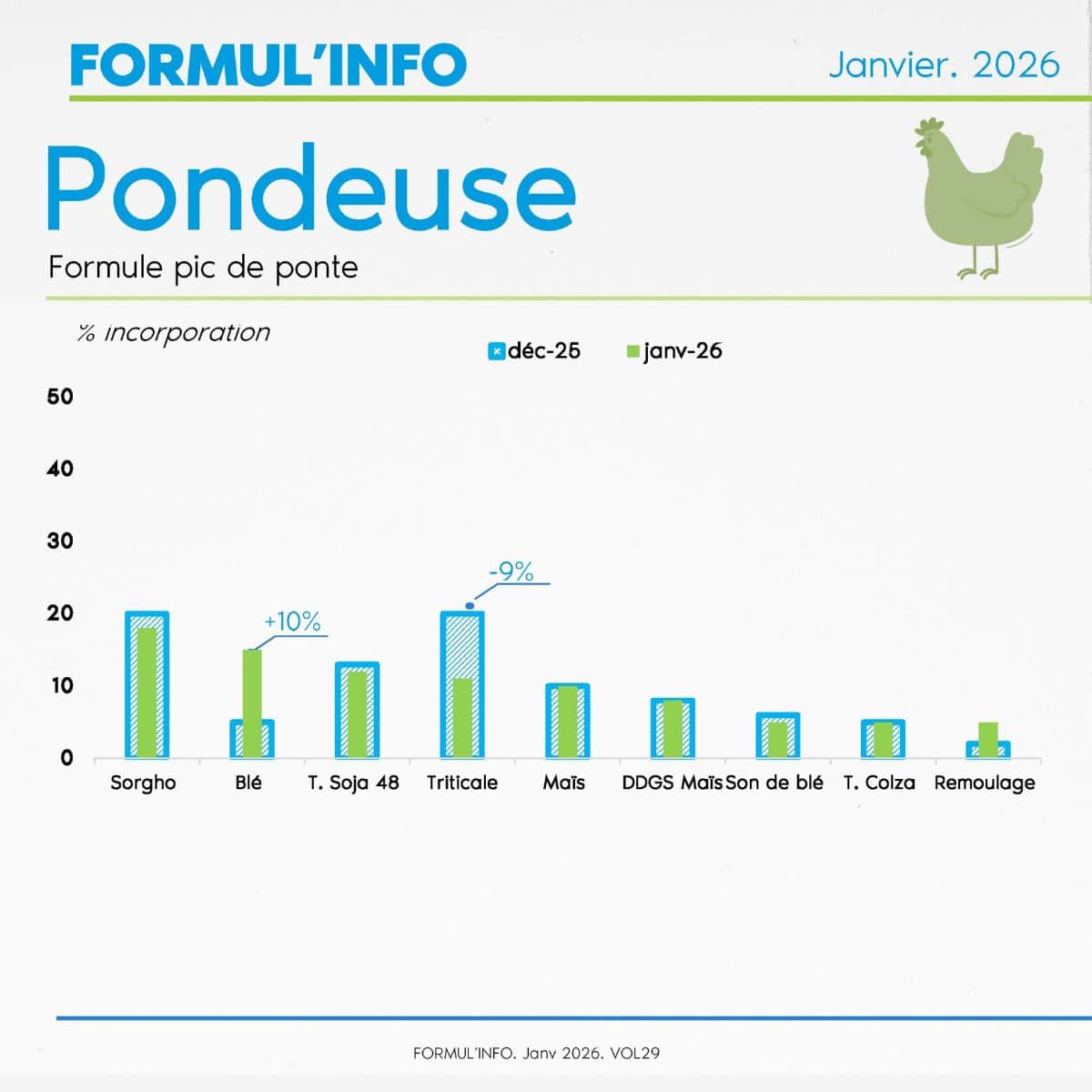
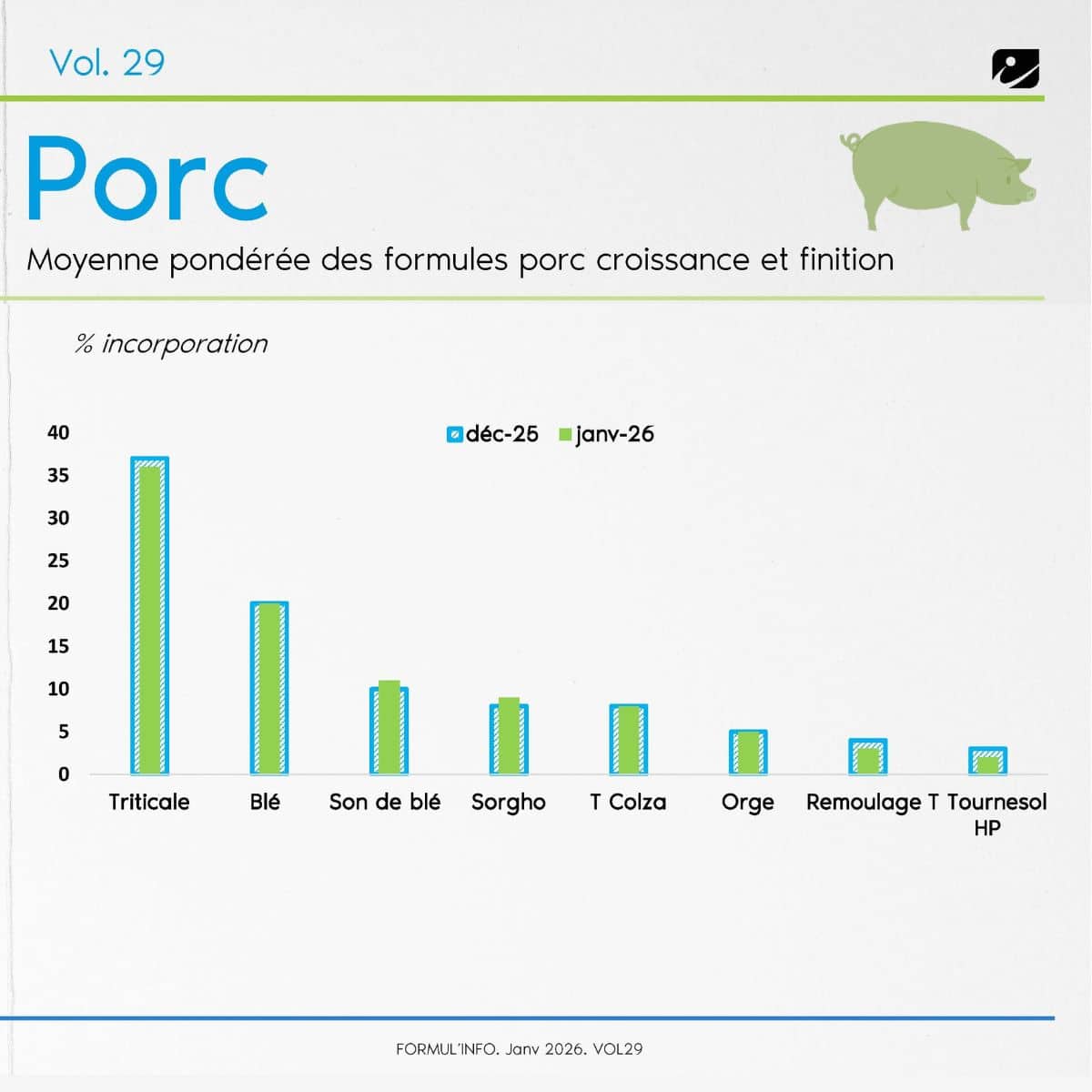
The cereal profile has changed, with wheat replacing sorghum and part of the barley, which nevertheless remains the main ingredient in the formula. Beet pulp compensates for the reduction in cellulose intake linked to the lower incorporation of barley.
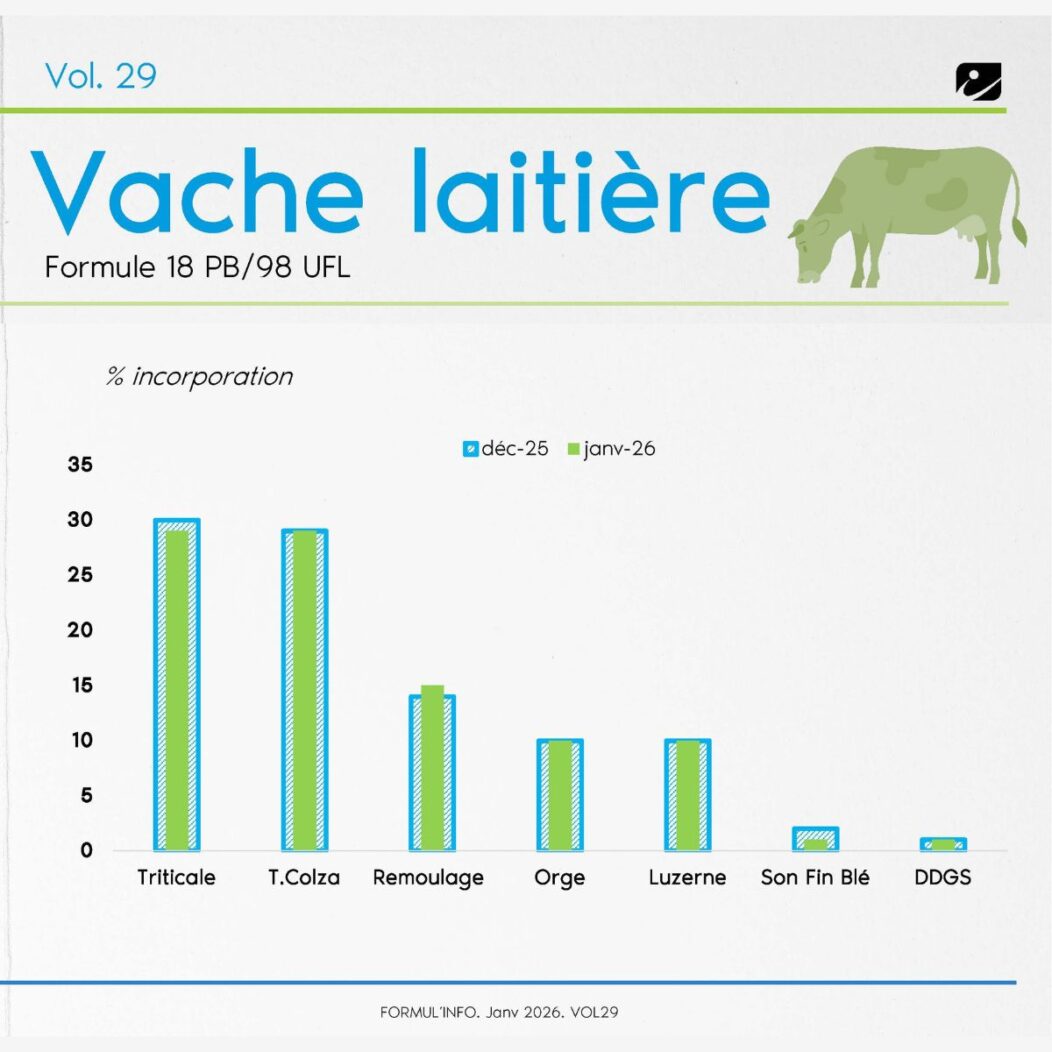
The cereal profile remains stable, with a balance between triticale and barley for energy and the presence of oilseed meal and alfalfa for protein and fibre.
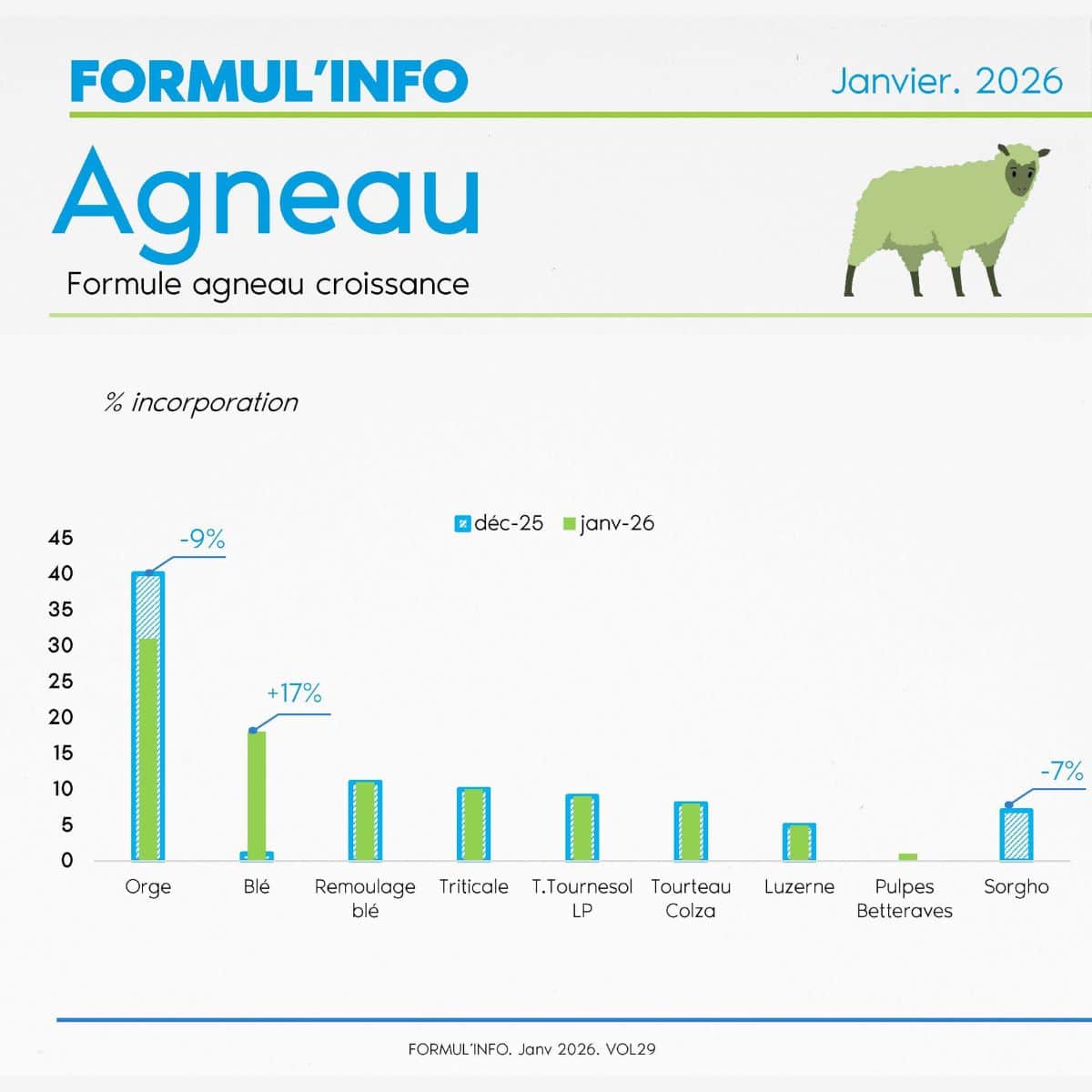
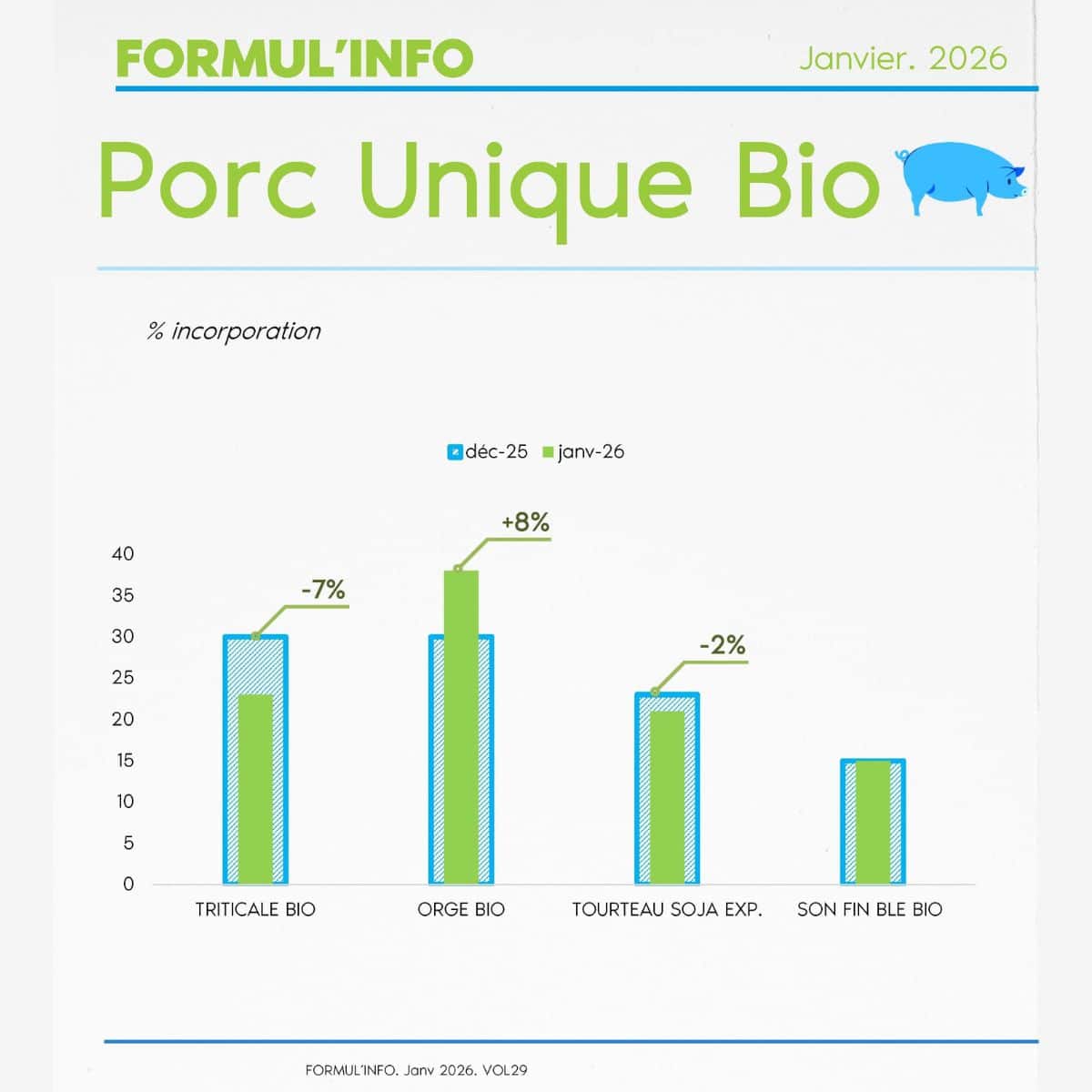
The formula is shifting towards more barley and less triticale, with the protein base remaining unchanged.
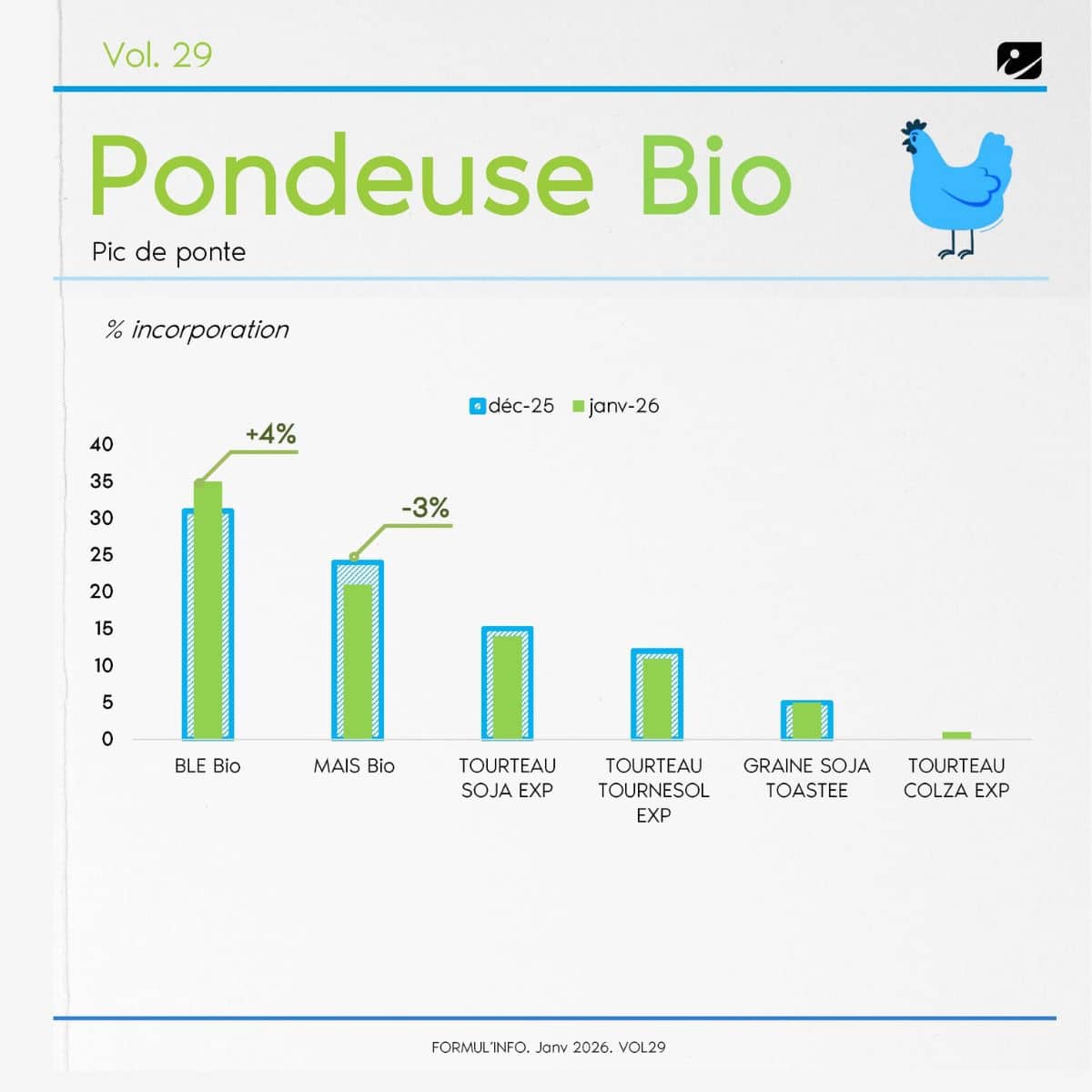
The cereal profile remains stable with a slight shift from maize to wheat. The protein profile is similar to December, with the addition of rapeseed, which is slightly more attractive this month.
The formula profile is stable compared to the previous month. Sorghum would be of significant interest from €340/t (-€1.2 on the range).