A newsletter dedicated not only to news and trends in agricultural commodity prices, but also to potential developments and changes in feed formulations for different livestock. The IDENA formulation team hopes you enjoy reading it!
The choice of industrial process configuration depends on production capacity, the type of finished product required and the investment cost.
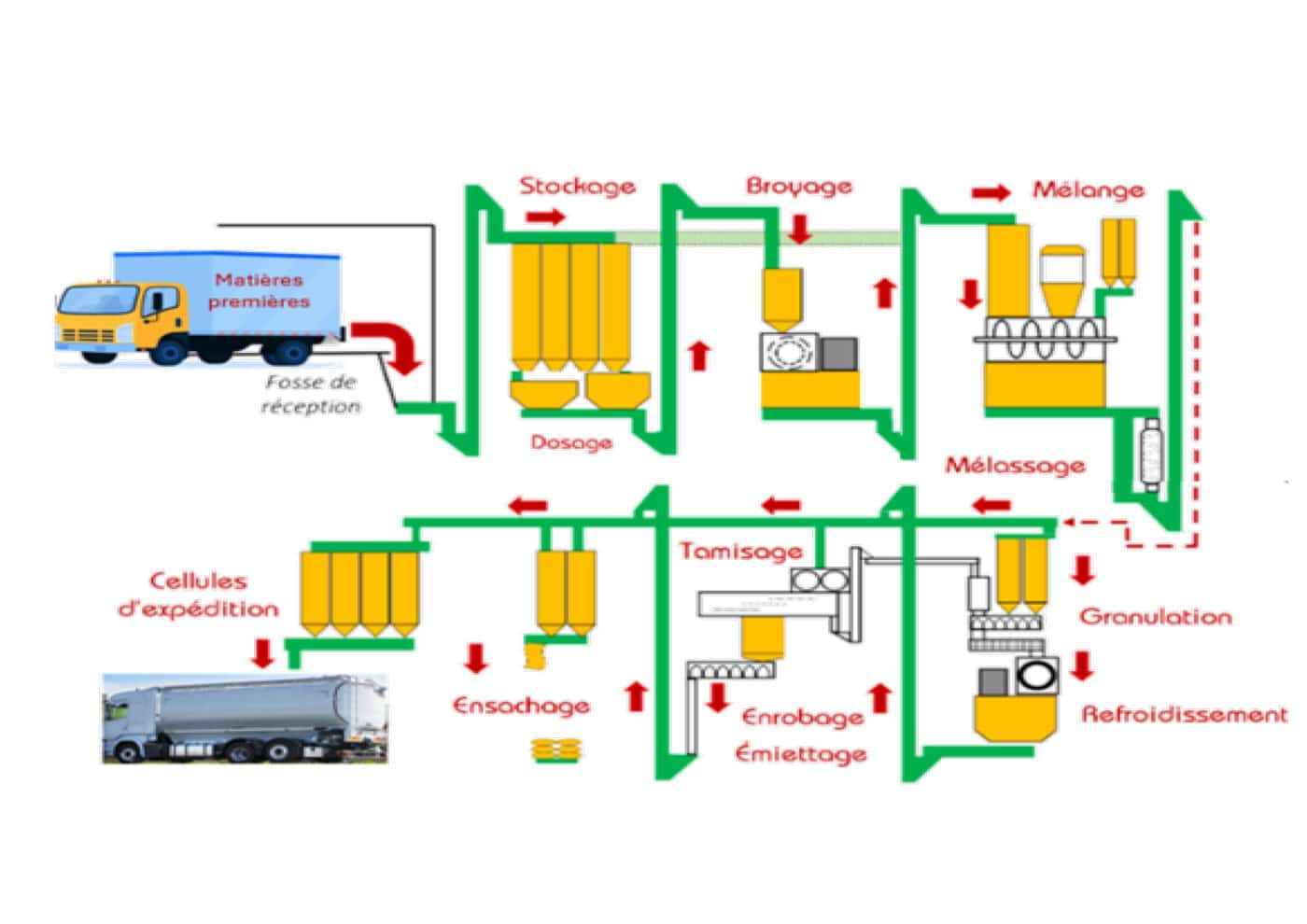
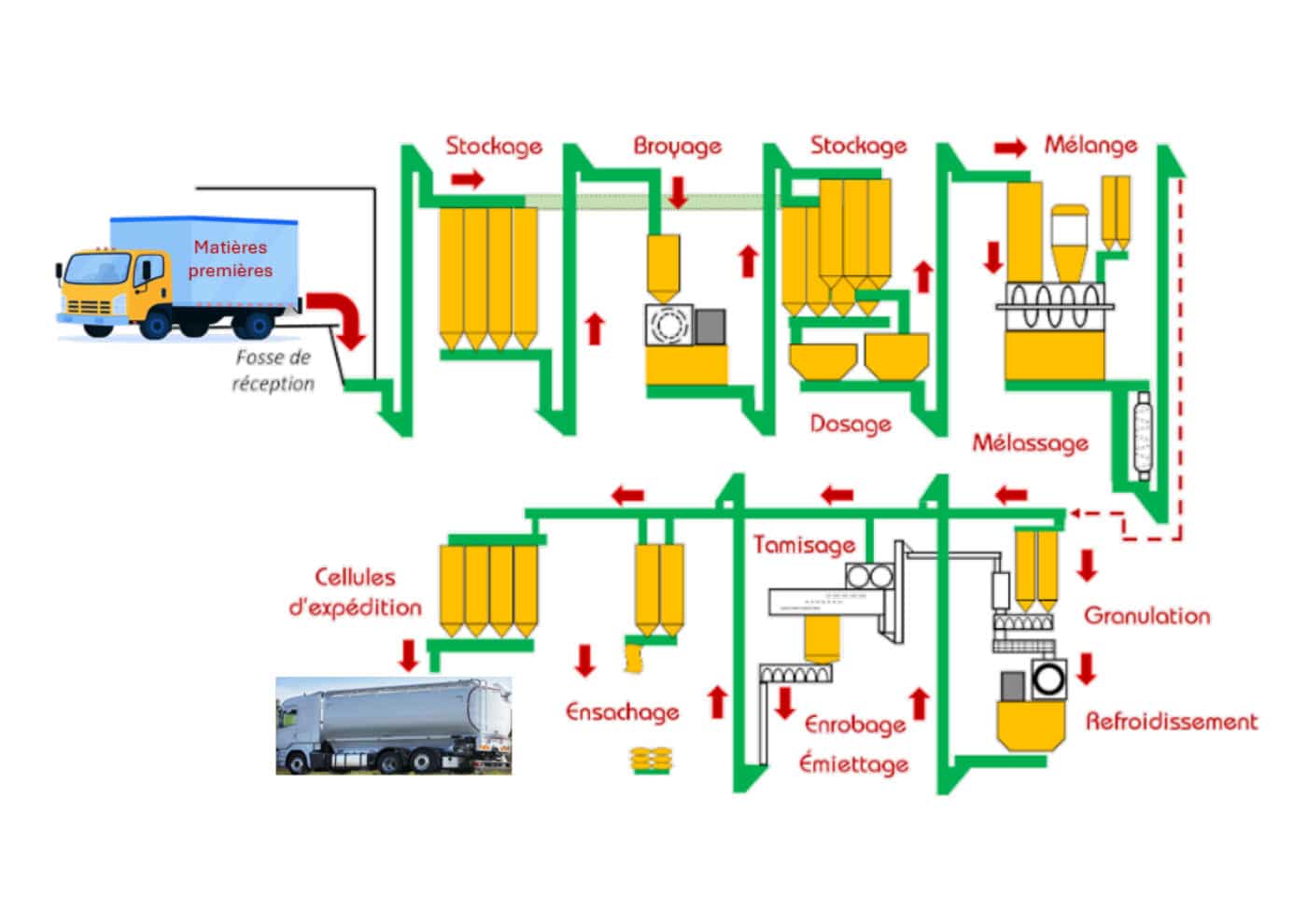
In the animal feed industry, the type of plant is mainly determined by the integration of raw material grinding into the process, in particular by its positioning in relation to the storage, dosing and mixing stages. Some facilities, such as premix plants, do not incorporate this unit operation and focus on mixing the ingredients.
Conversely, in pre-grinding and pre-dosing plants, the positioning of the grinding stage — upstream or downstream of the dosing stage — determines the process architecture, formulation flexibility, control of particle size, etc.
See the separate processes involved in pre-dosing and pre-grinding plants, illustrated with diagrams.
Pre-dosing plant:
Pre-grinding Plant:
Each option has its advantages and disadvantages. It is essential to consider several criteria, such as storage, formulations and production, before making a decision.
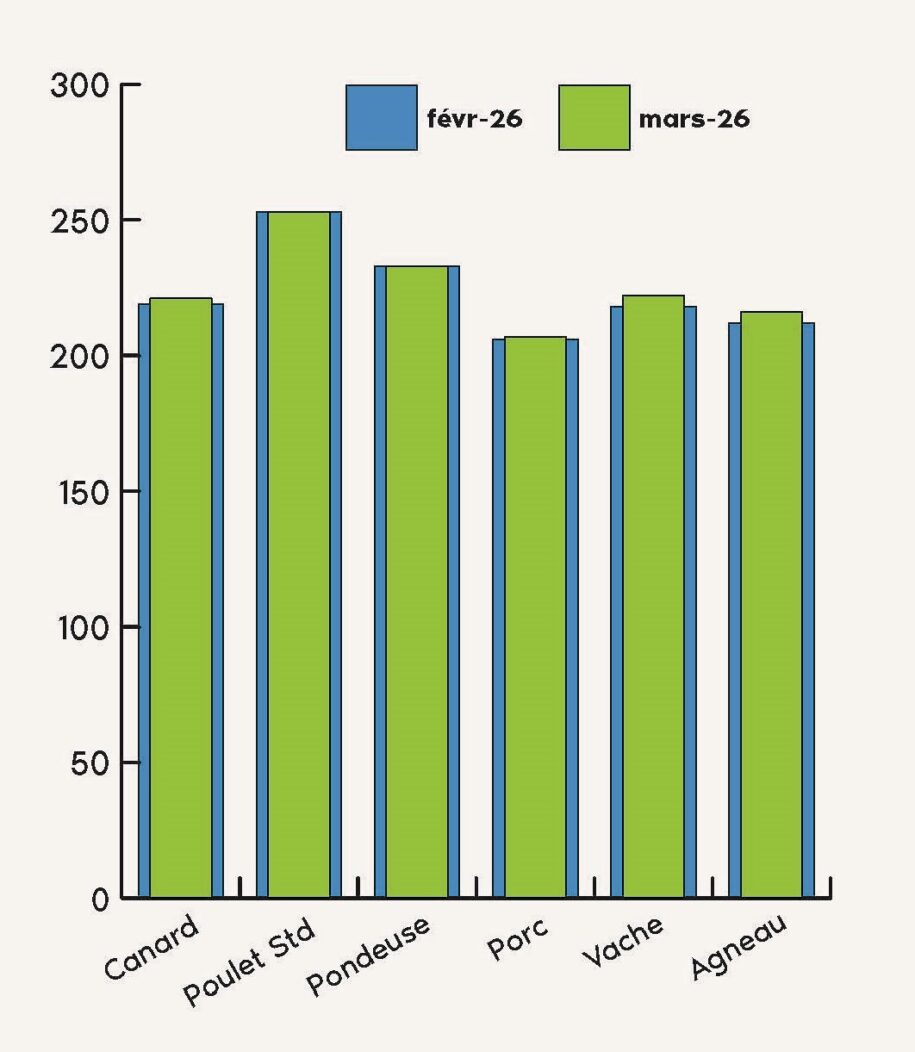
In March, cereal prices remained stable. There was a slight rise in the price of oilseed meal.
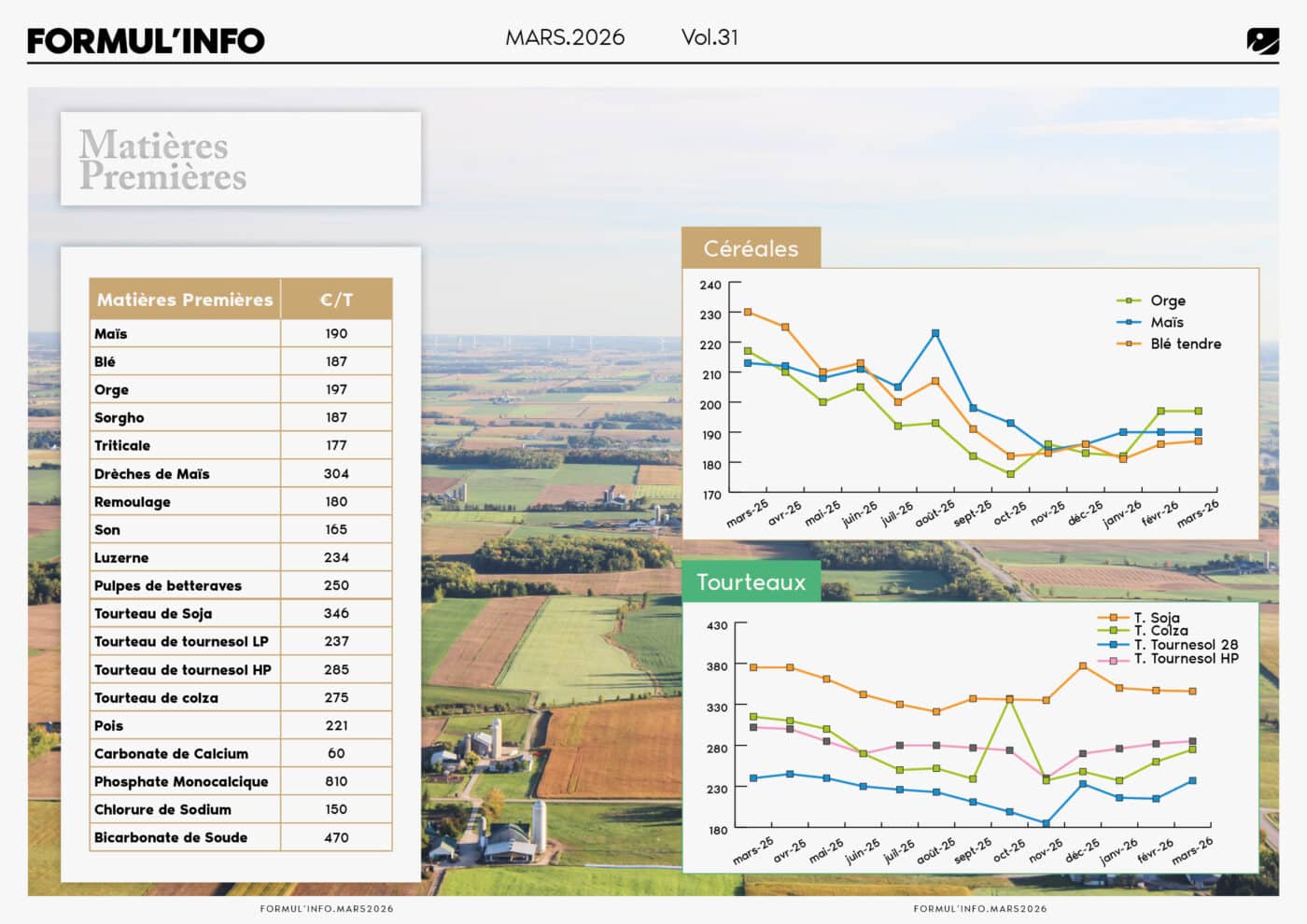
This month, we are seeing a fairly stable trend in feed costs across all species.
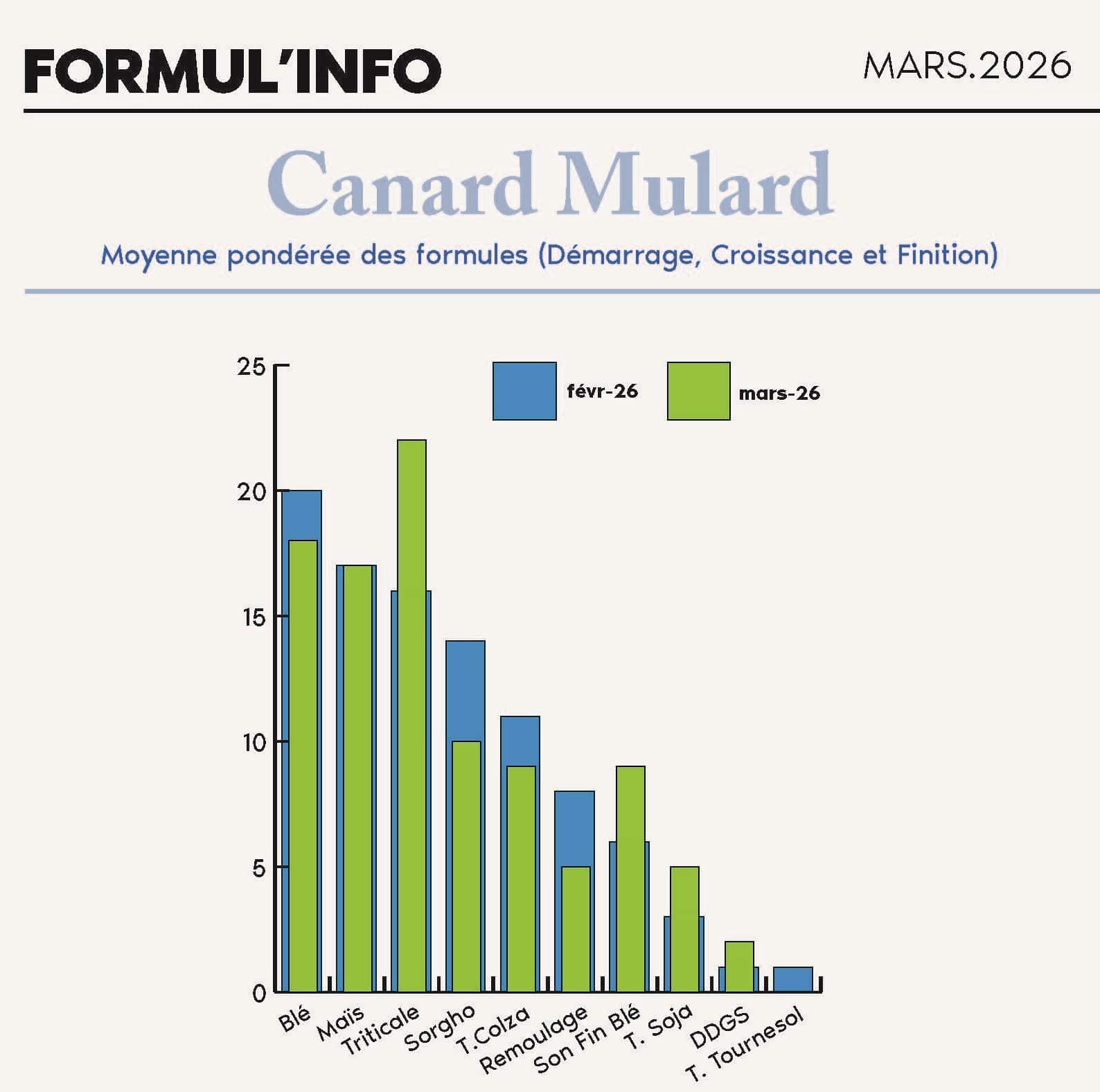
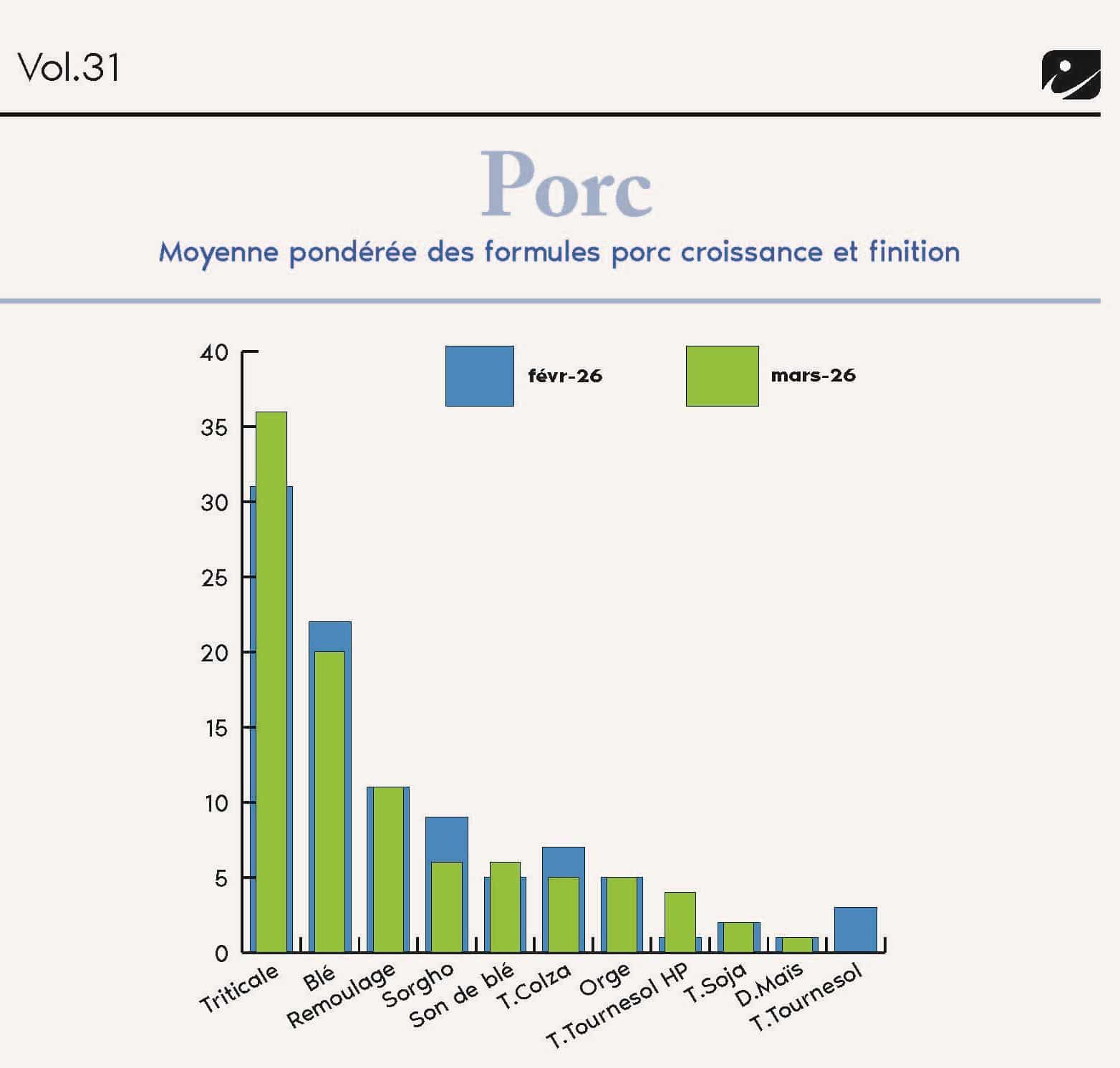
There has been a decline in wheat and sorghum to make way for more triticale. The composition of oilseed meal is shifting towards an increase in soya, with a reduction in rapeseed and the removal of sunflower. The mix of wheat by-products is changing slightly, with a shift from re-milling to bran.
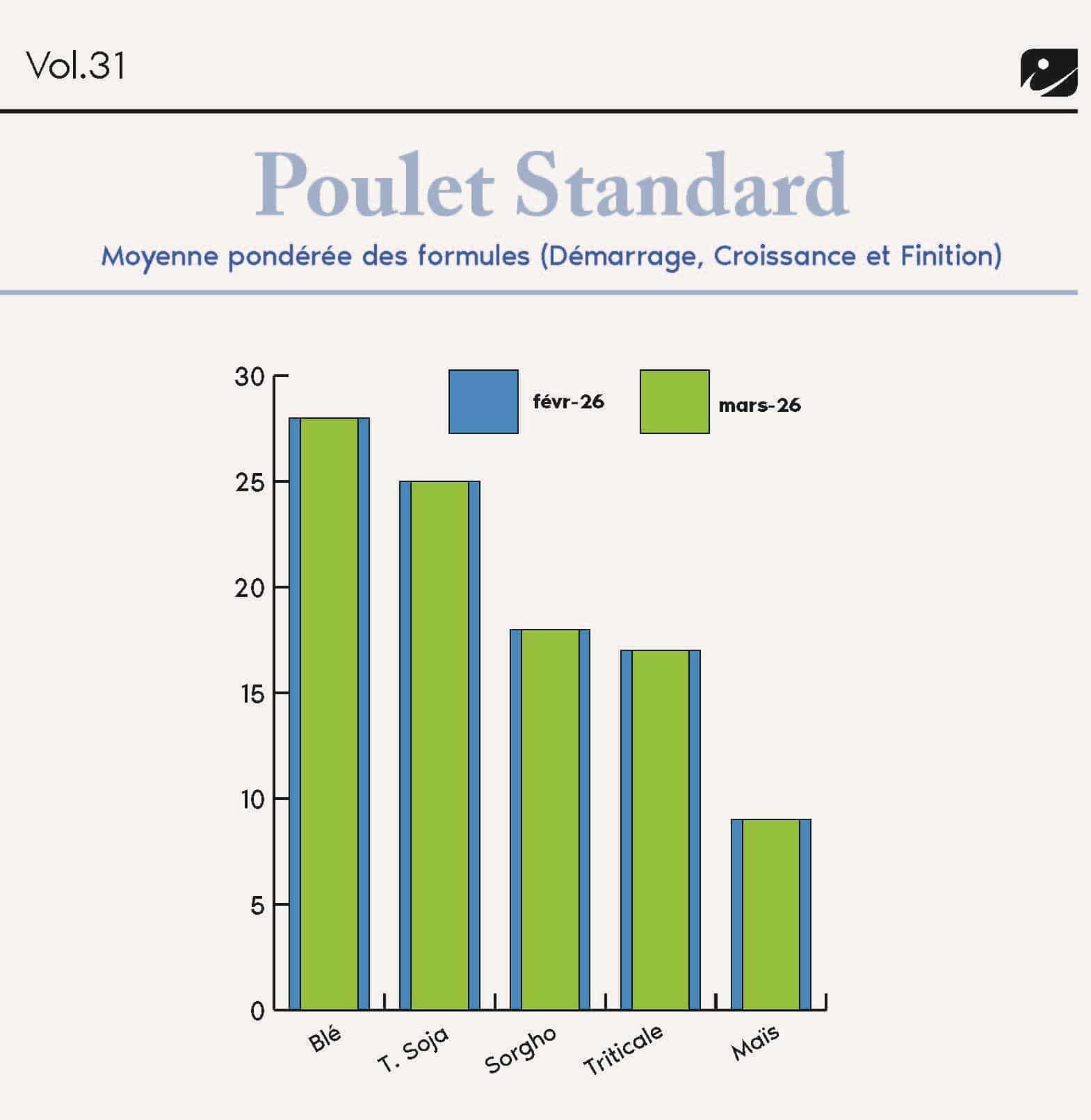
The formulation of the standard chicken feed remains unchanged between February and March.
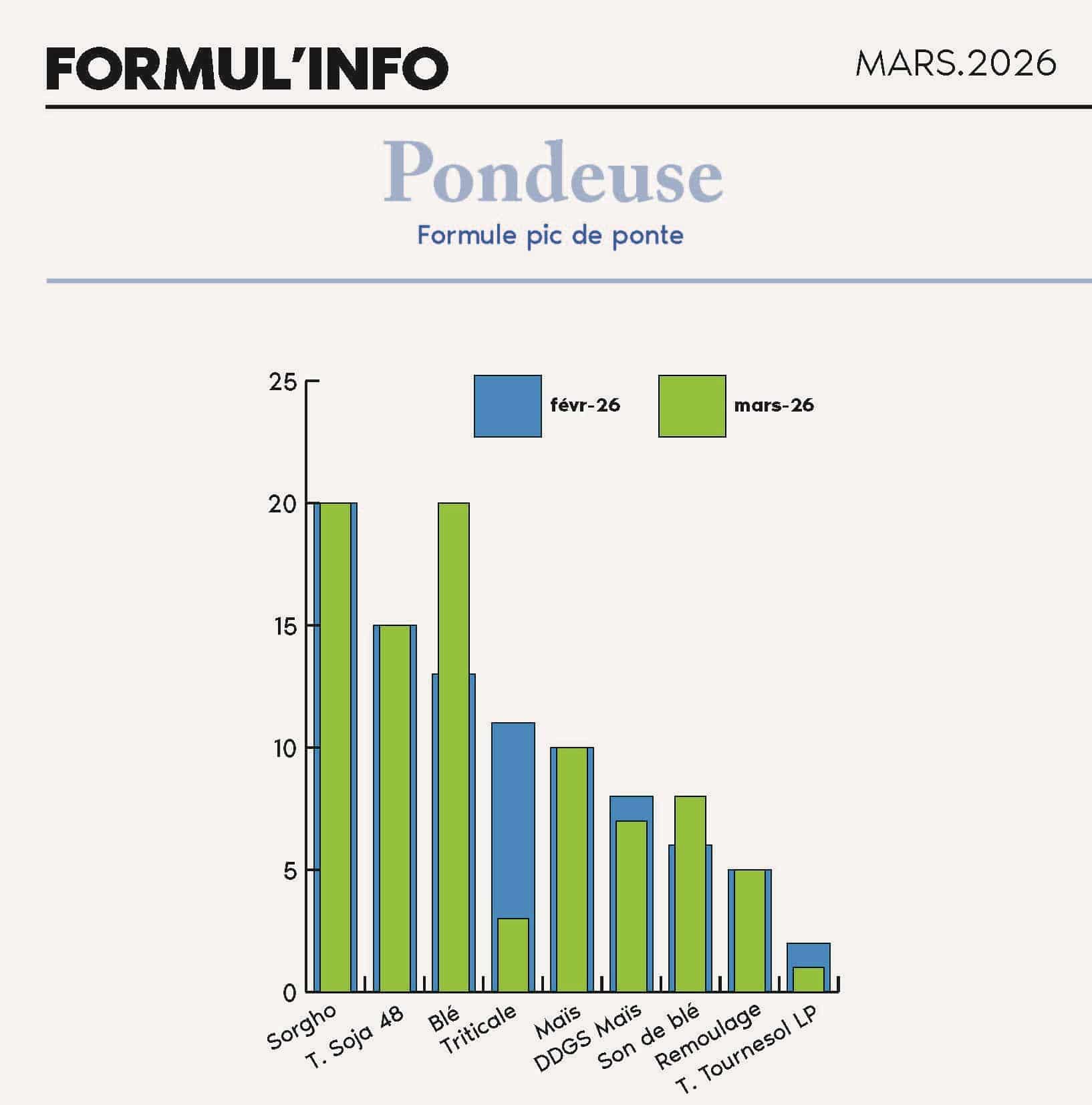
The mix is shifting towards more wheat and wheat bran, with a significant reduction in triticale.
There has been a reduction in wheat and sorghum to make way for more triticale. Rapeseed meal has been reduced in favour of high-protein sunflower meal, which is now the sole source of sunflower in the formulation. By-products (re-ground meal, wheat bran) remain broadly stable.
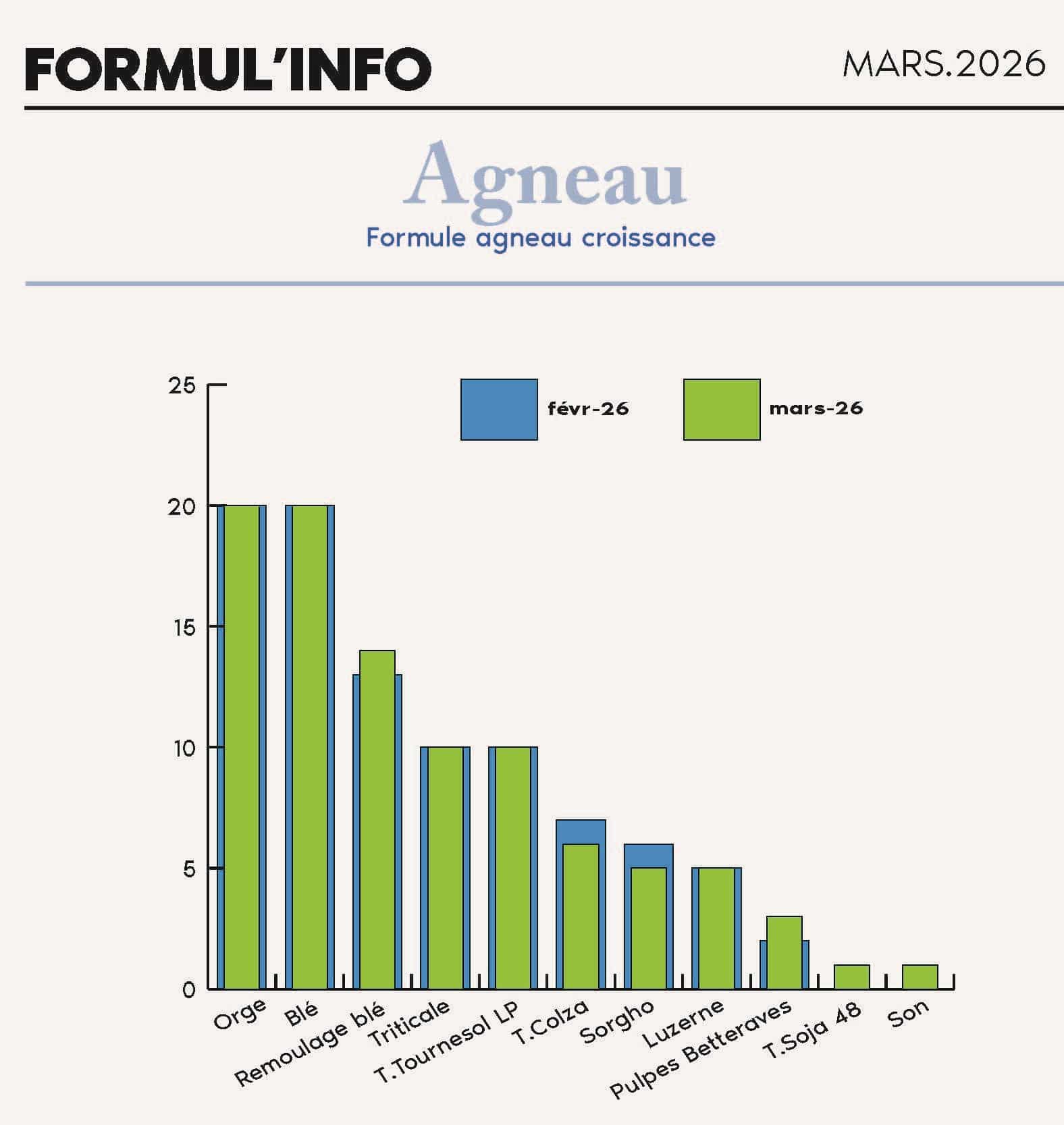
The lamb formula remains unchanged.
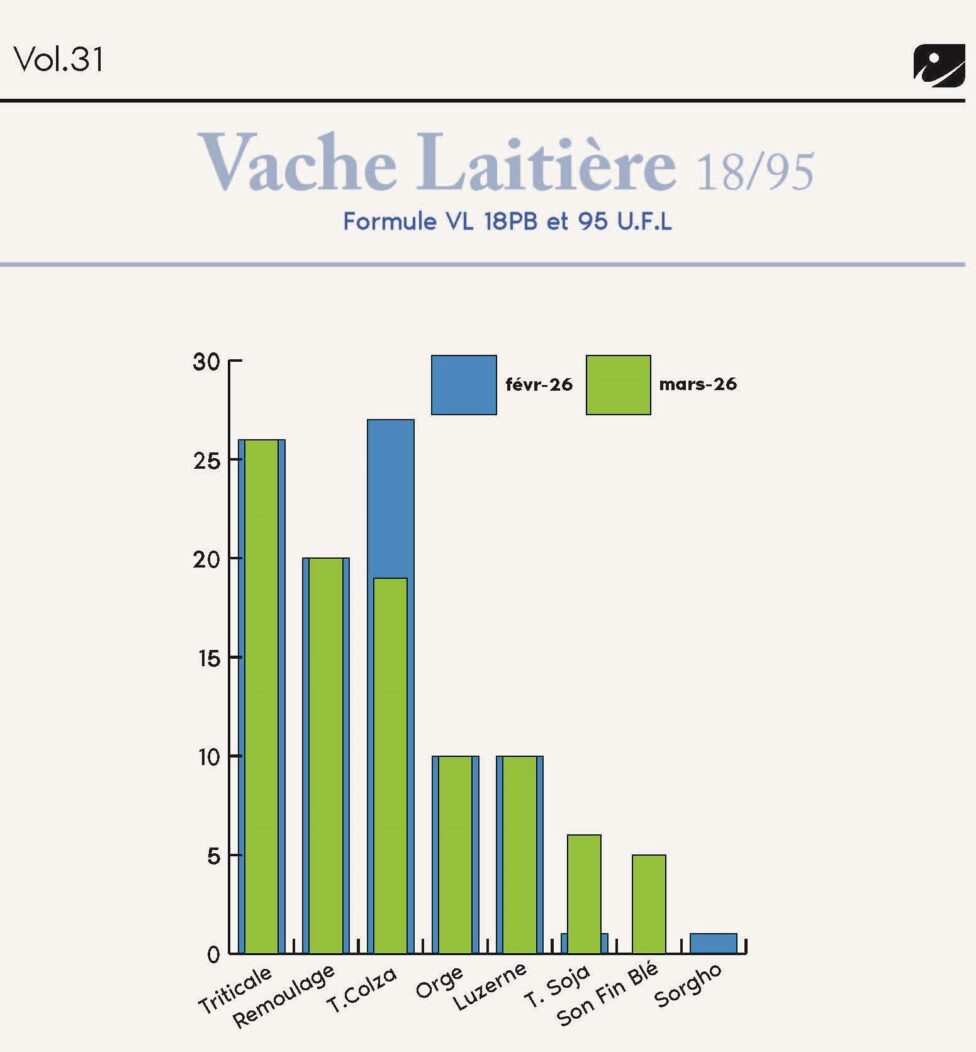
The majority of the formulation remains unchanged. The increase in soya meal leads to a decrease in rapeseed meal, the loss of which in terms of fibre is offset by the addition of bran.
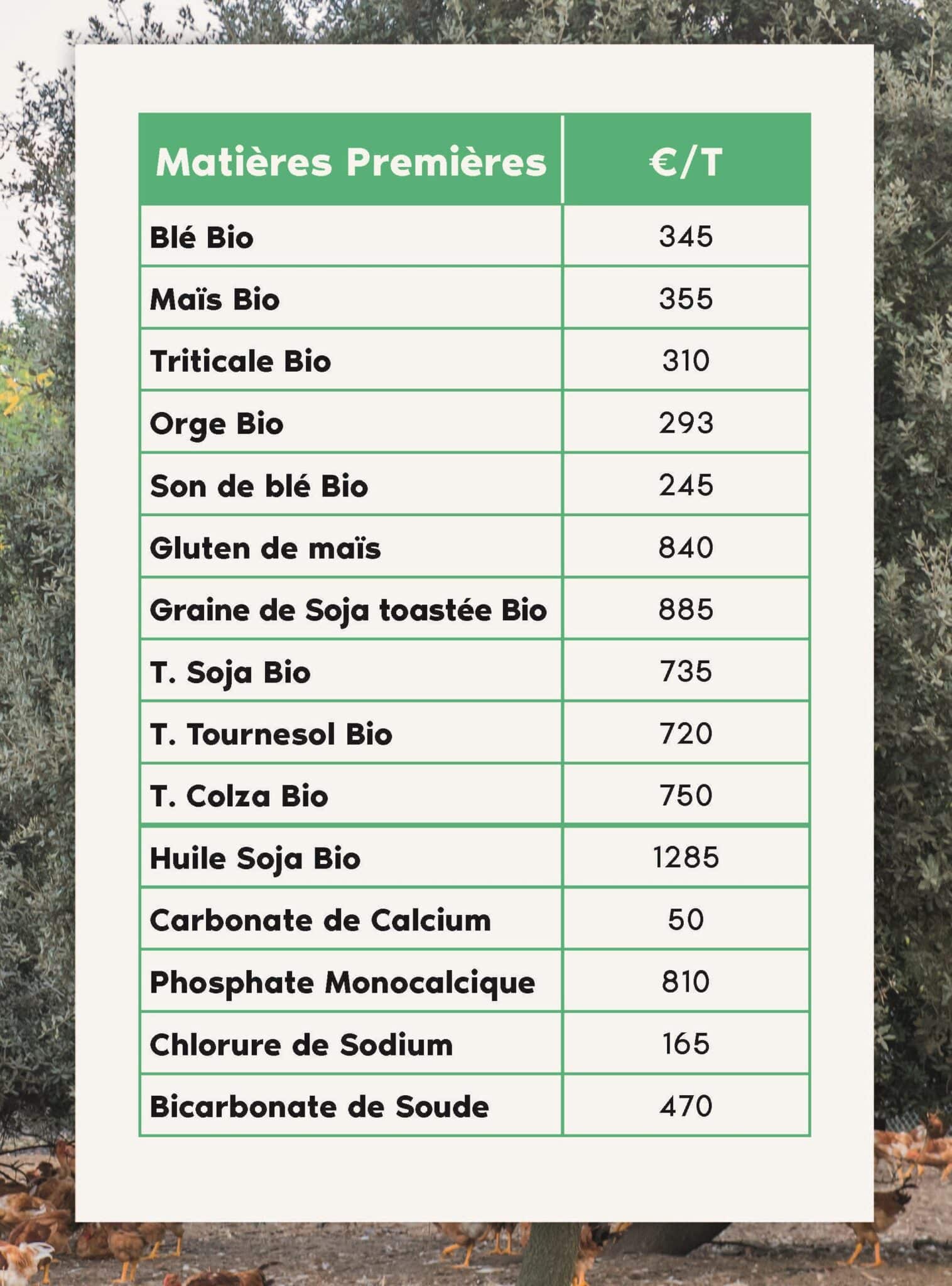
Between February and March, the price of organic pig feed remained stable despite a slight shift from barley to triticale.
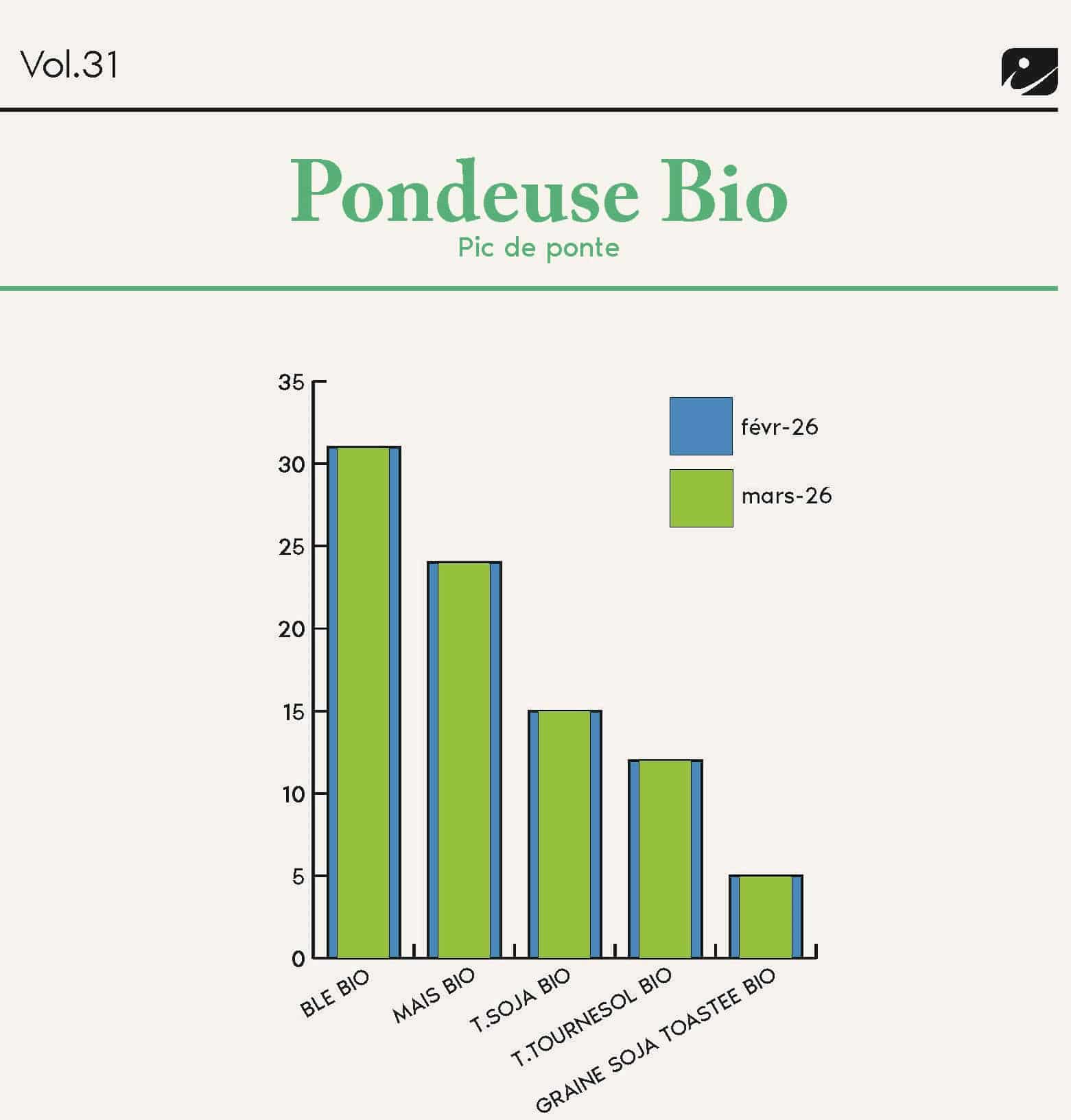
The organic layer feed remains stable between February and March.
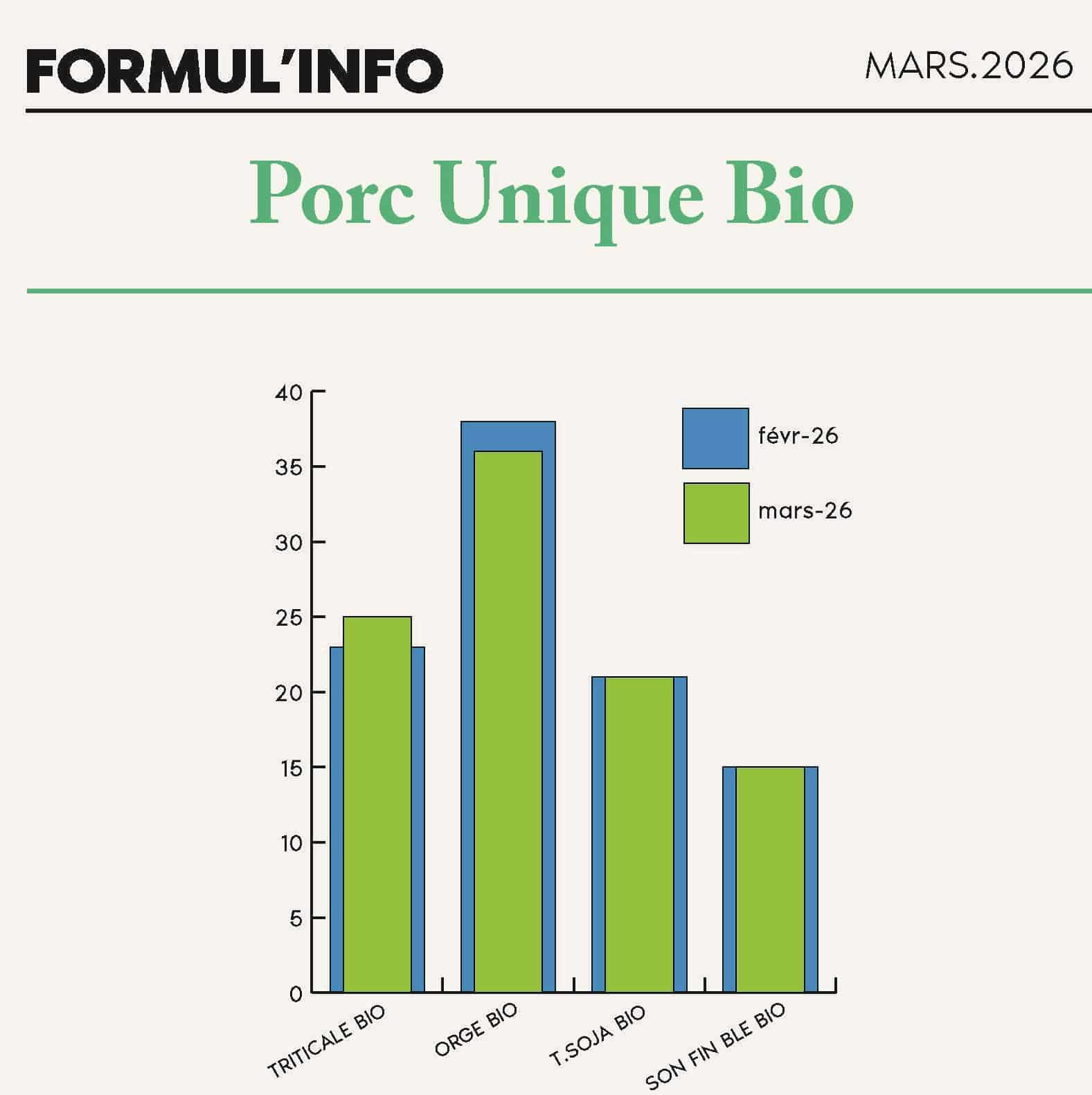
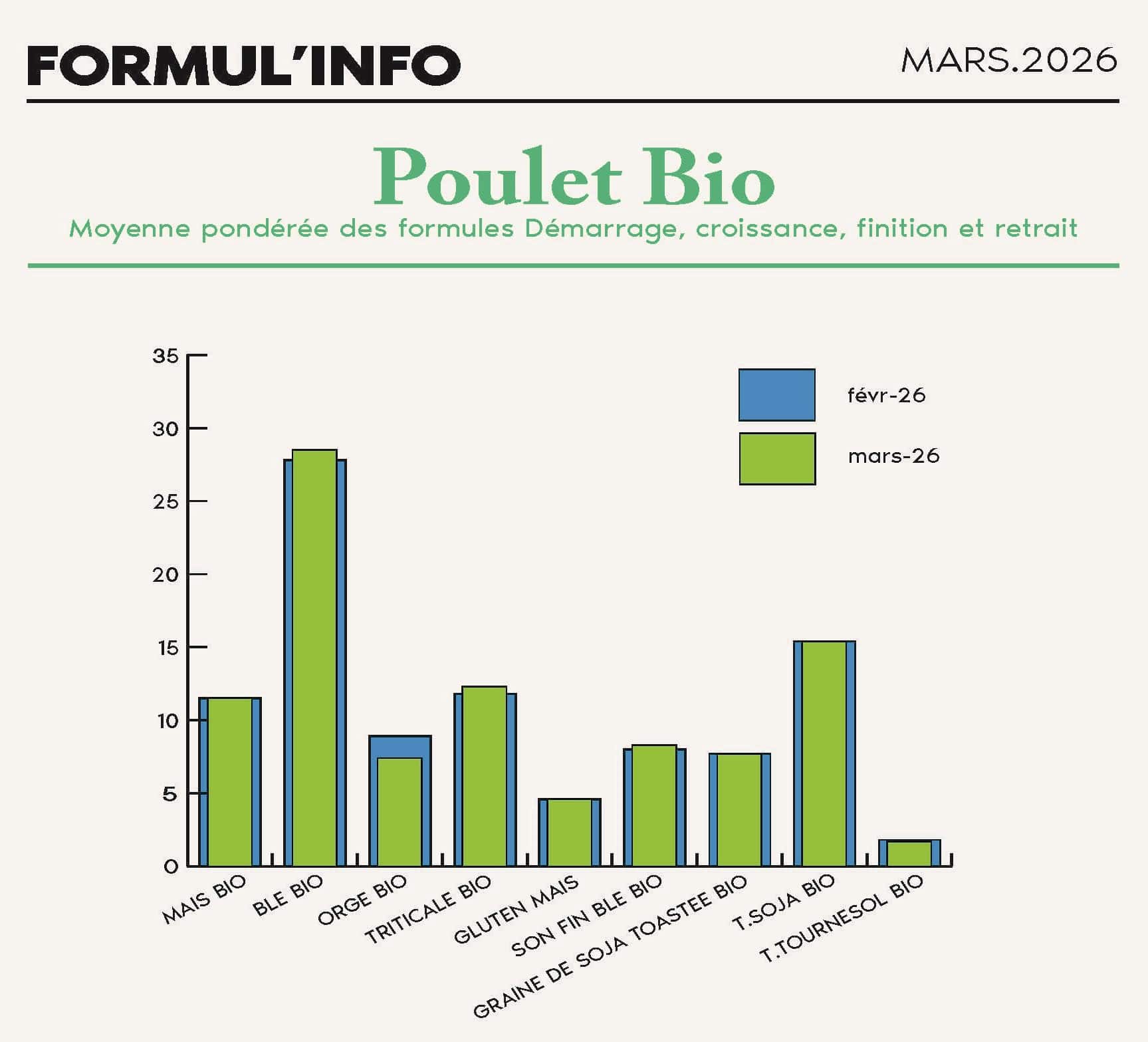
There has been a slight decline in barley, offset by other cereals.