A newsletter dedicated not only to the latest news and price trends for agricultural commodities, but also to potential developments and changes in feed formulations for various livestock. The IDENA Formulation Team hopes you enjoy reading it!
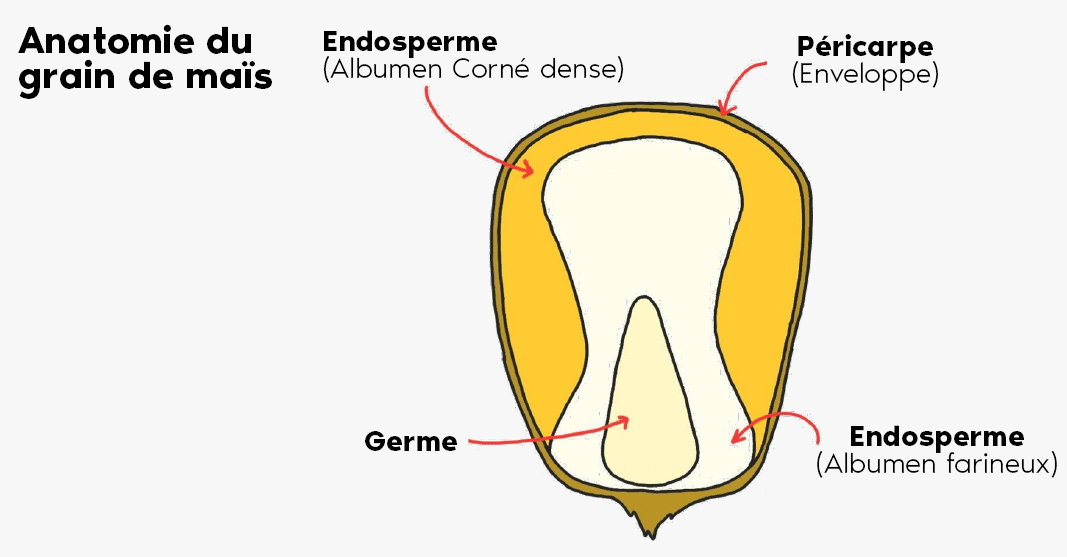
Corn byproducts, derived from various industrial processes, have diverse nutritional profiles. Their use in animal feed is a key factor in optimizing performance.
Why use by-products?
The average nutritional composition of a corn kernel (% DM) is approximately 63–72% starch, approximately 8–10% protein, approximately 4–5% fat, and approximately 2–3% fiber.
Each byproduct comes from a different part of the grain:
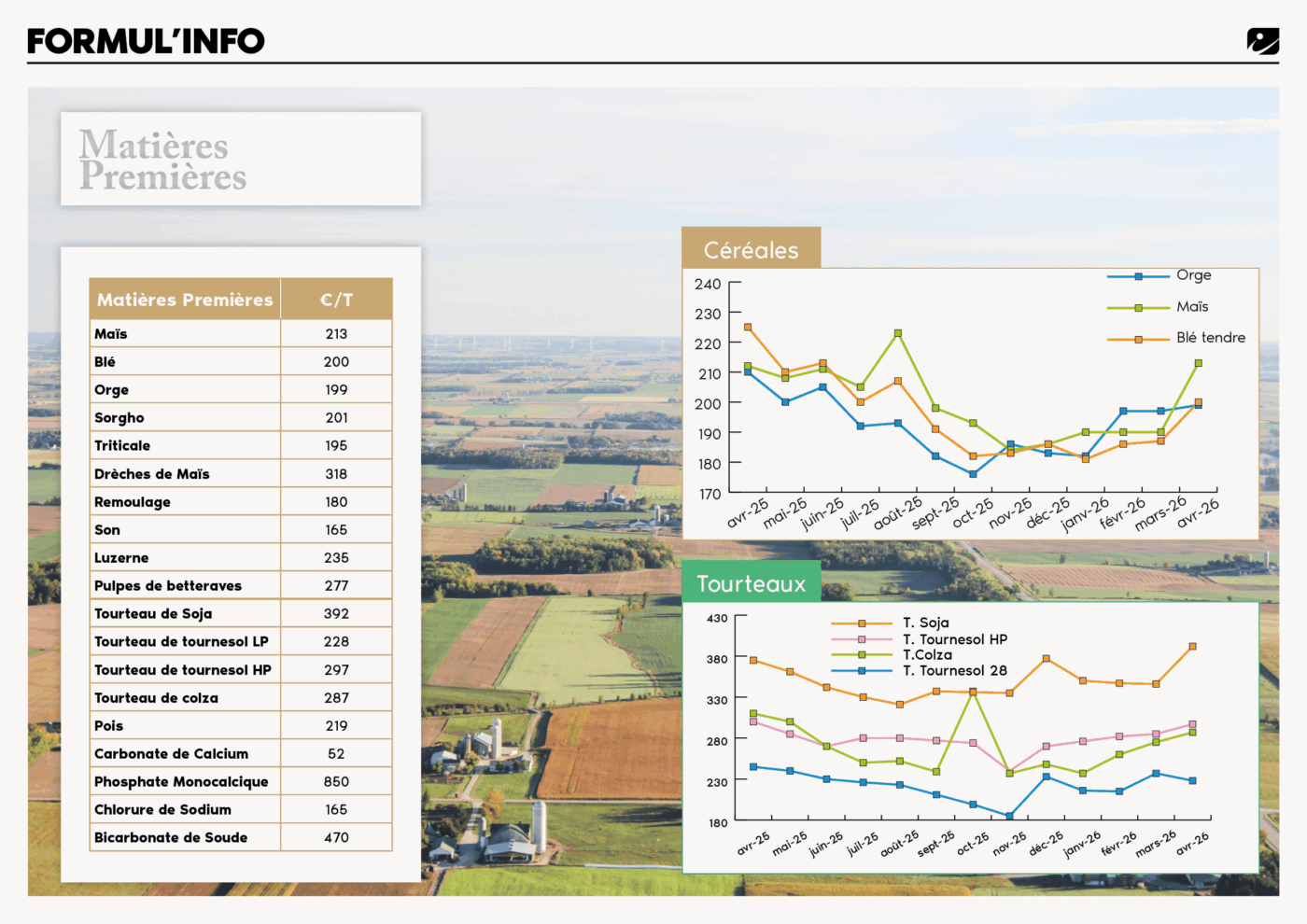
In April, grain prices remained stable, while meal prices rose slightly.
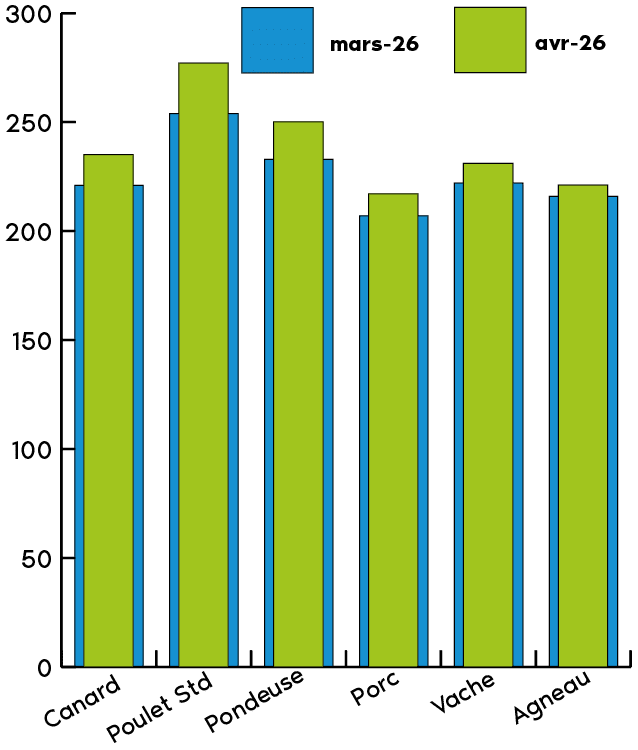
This month, prices for monogastric and ruminant feed formulations have generally been on the rise.
This month, the grain mix consists of wheat, corn, and sorghum. As for oilseed meal, soybean and rapeseed meal have declined slightly, making way for LP sunflower meal (+4%). Nearly all of the triticale has been replaced by wheat. This month, the volume of middlings is higher than that of bran (-5%).
For the month of April, there was a decline in corn prices, which was offset by a rise in wheat prices (+5%). The rest of the formula remained stable.
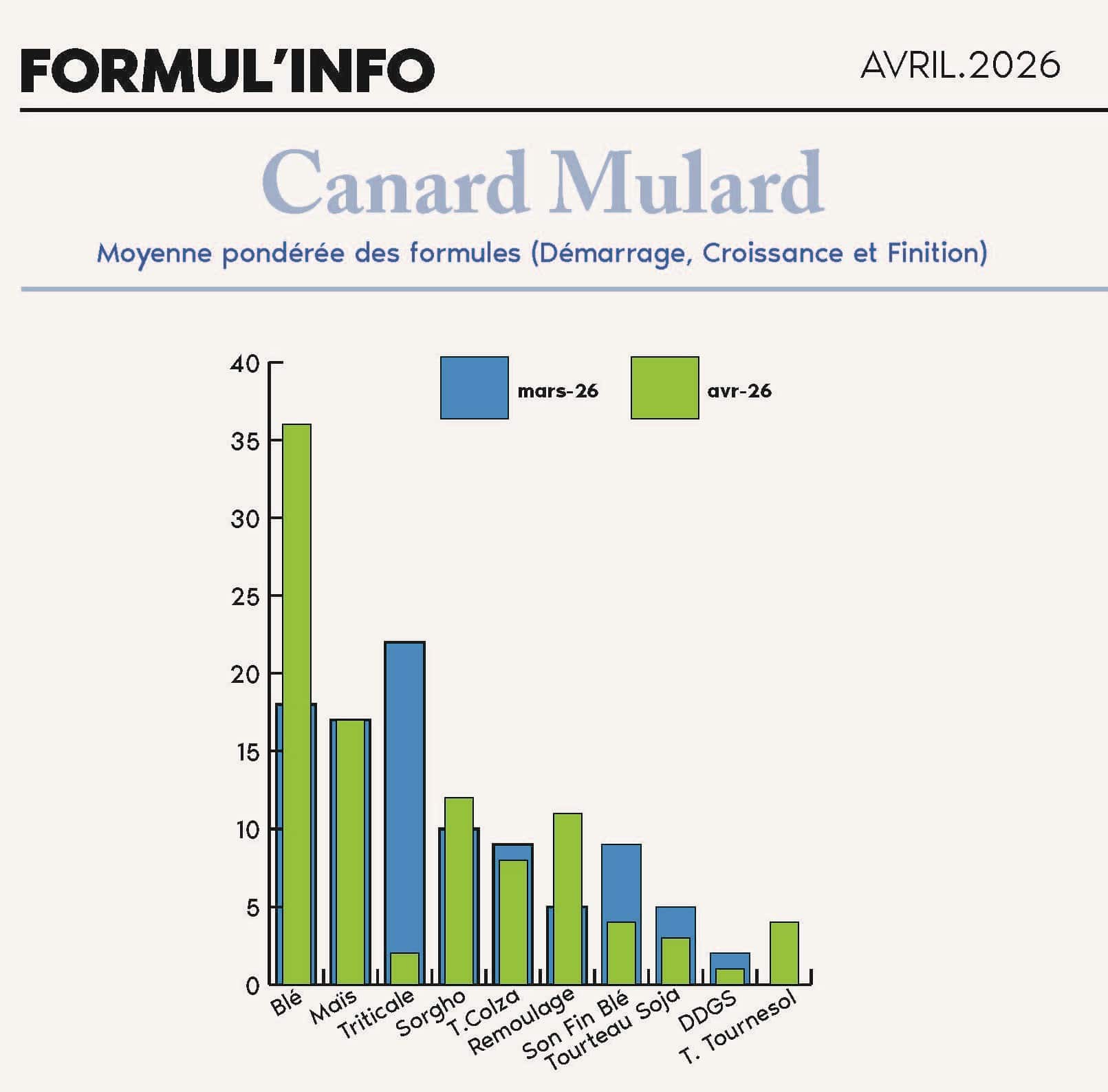
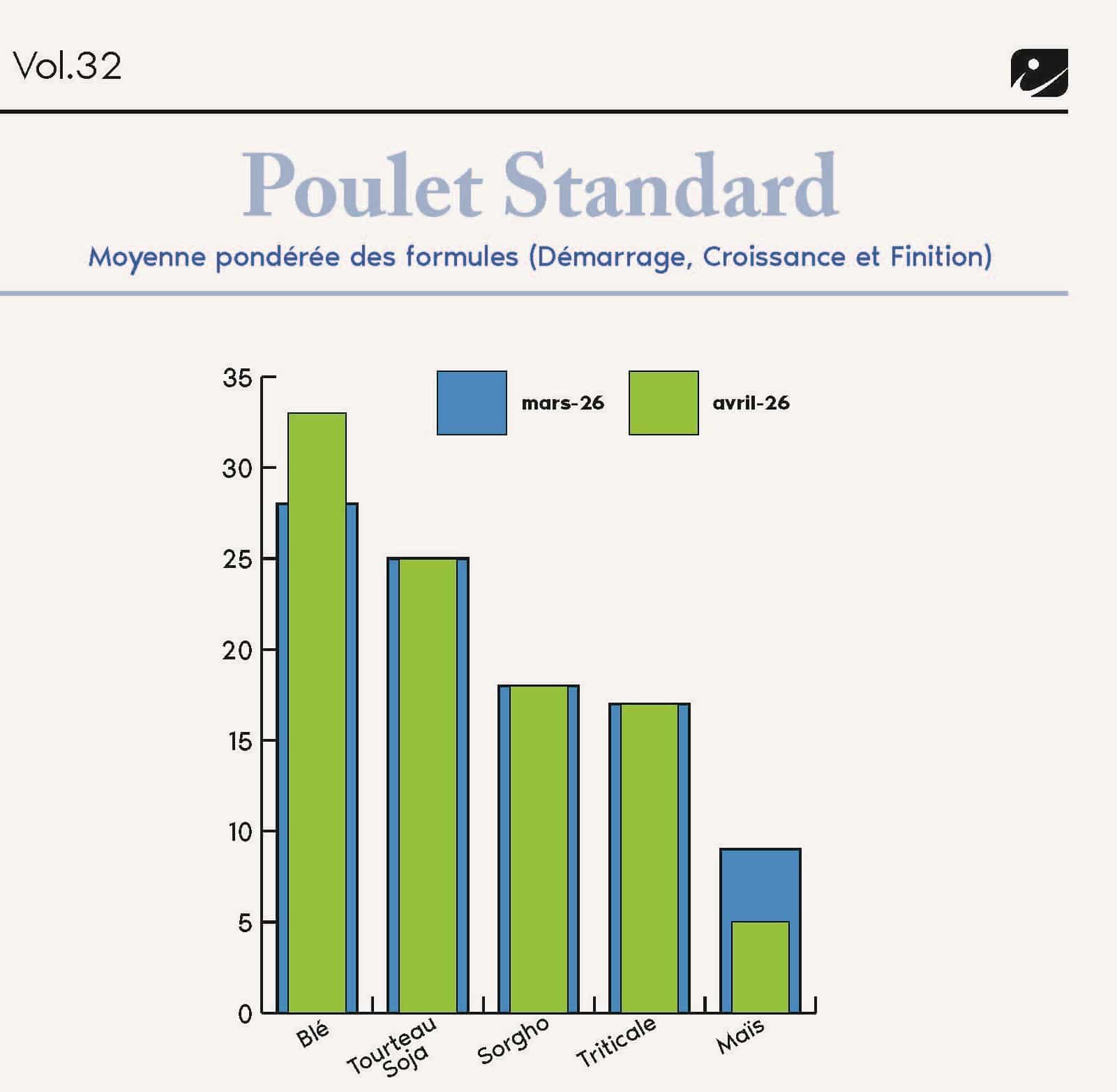
This month, triticale is not a viable option. It has been completely replaced by wheat. The rest of the mix remains unchanged from March.
Pig:
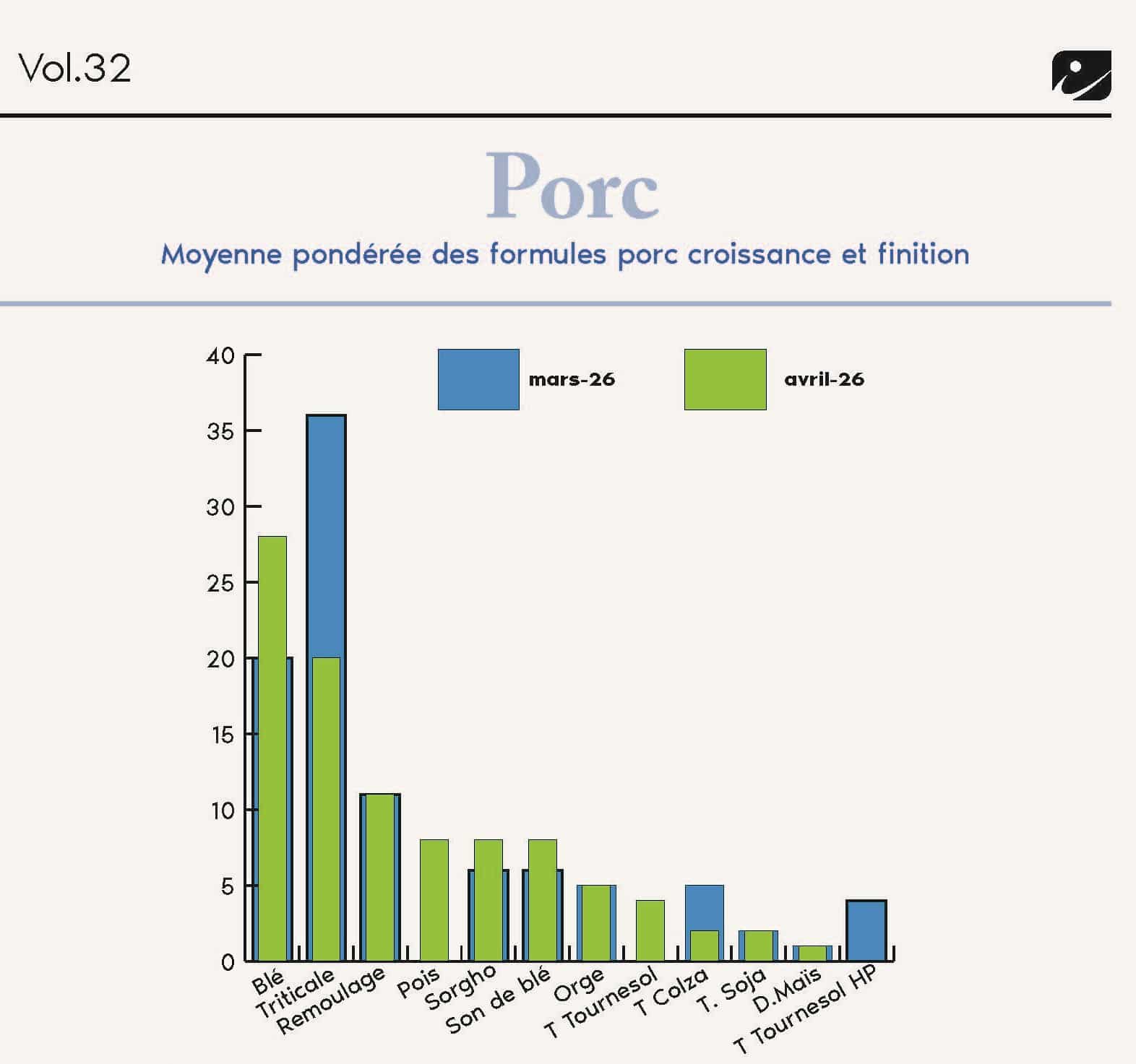
This month, wheat prices rose (from 20% to 28%), making it the dominant grain. This month, there has been a shift between LP sunflower meal (+4%) and HP sunflower meal (-4%). This increase partially offsets the decline in triticale (-16%). The decline in triticale has made room for an increase in peas (+8%).
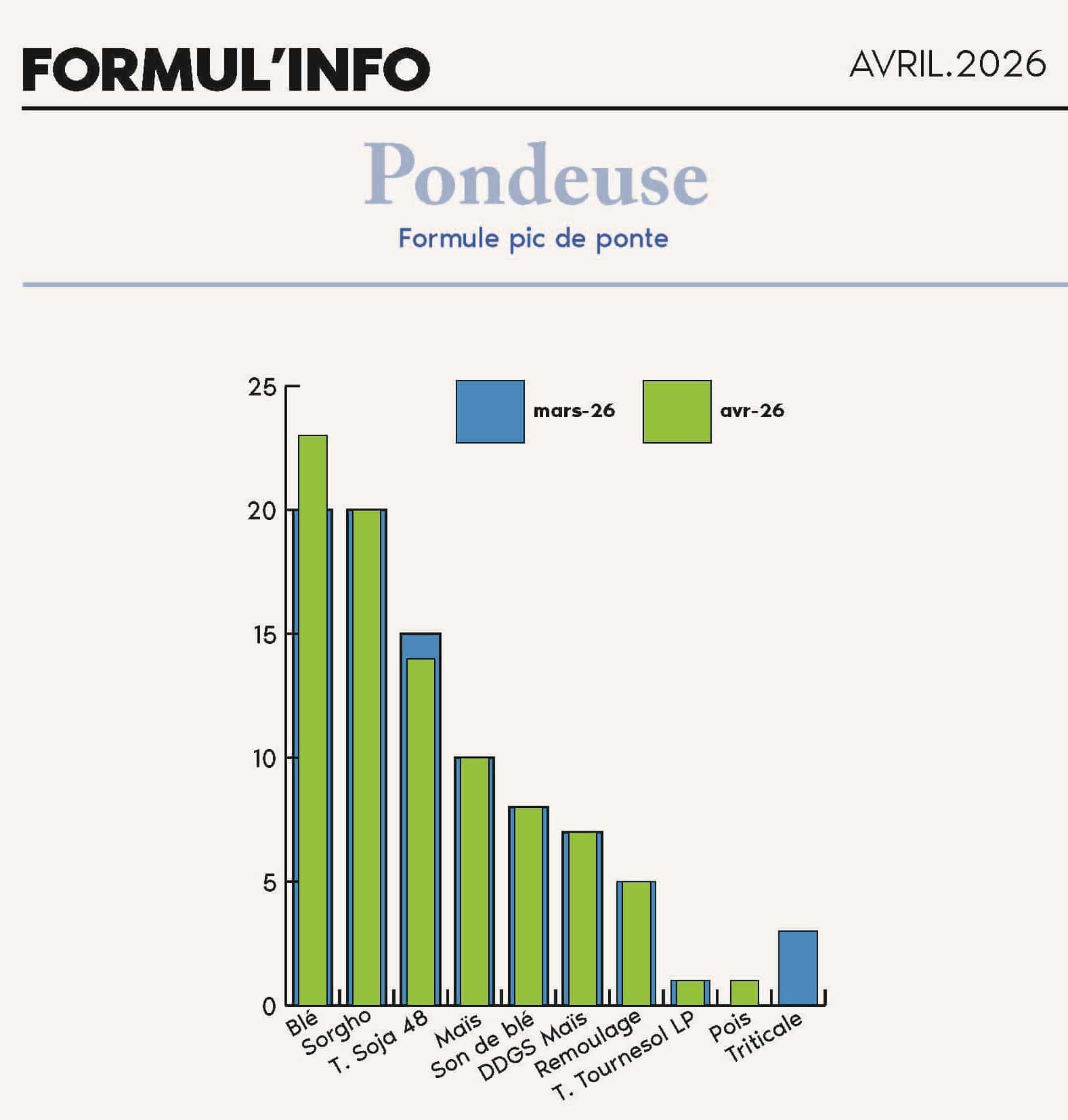
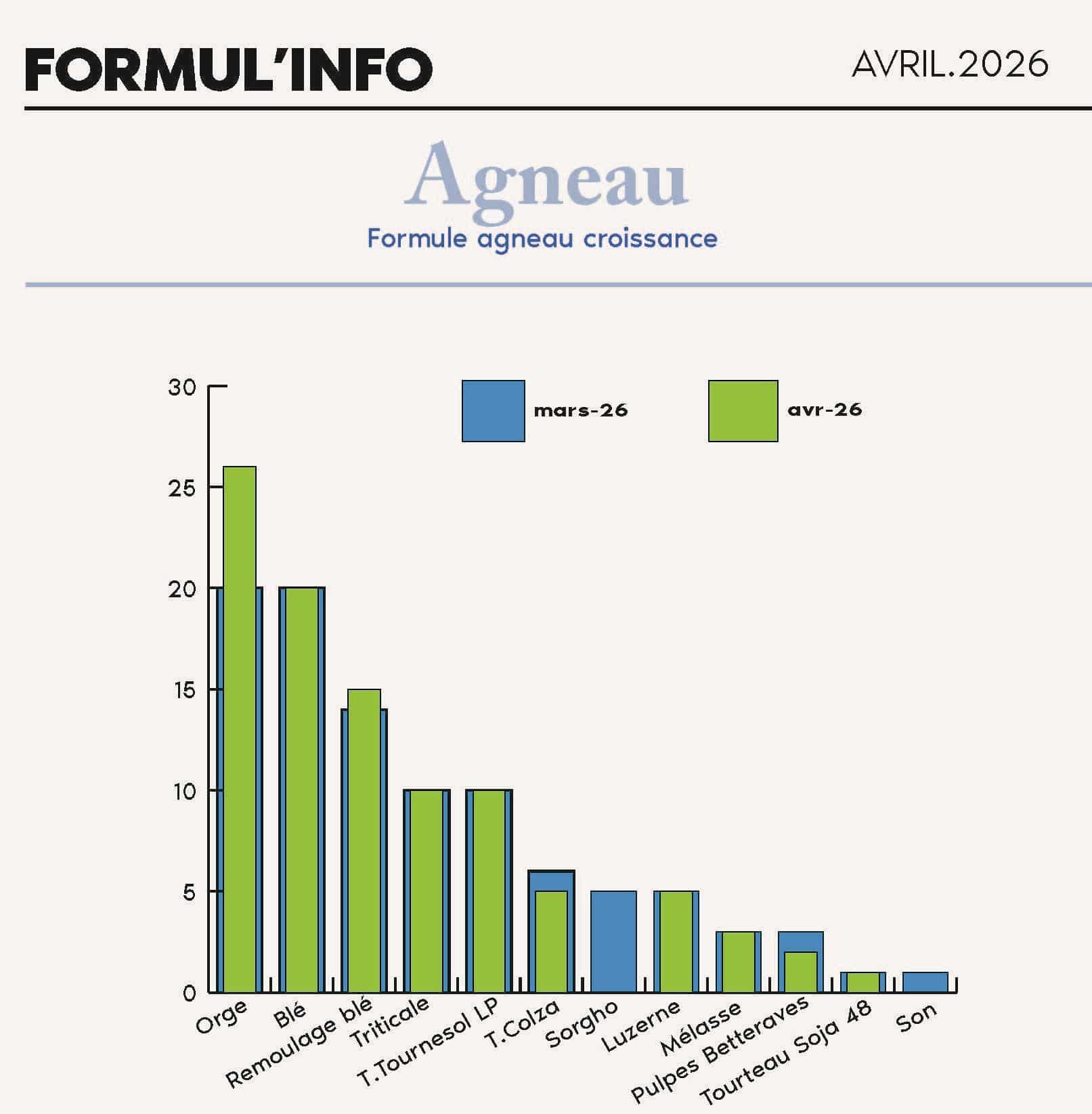
This month, sorghum is being dropped from the mix and replaced entirely by barley.
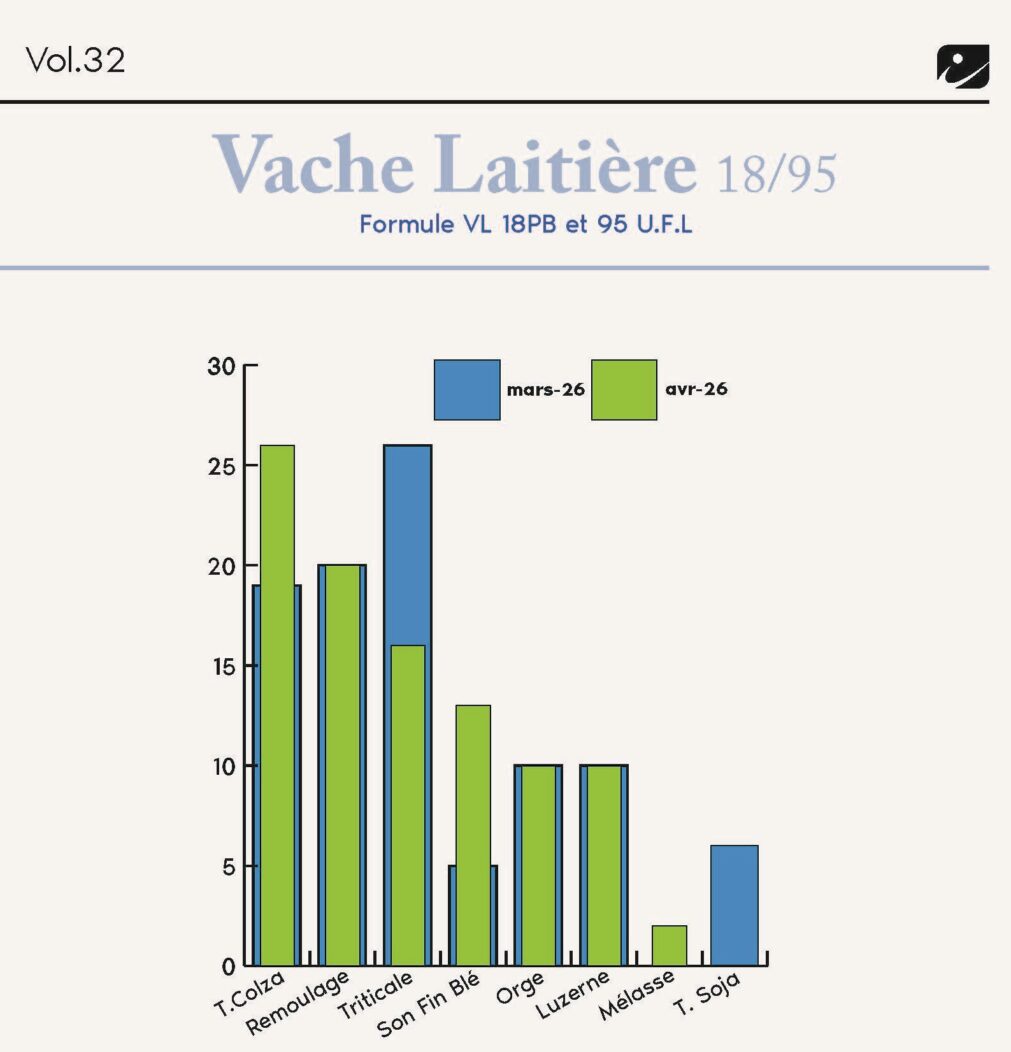
There has been a decrease in the triticale content (-9%), offset by an increase in bran. The increase in bran and rapeseed meal has led to a rise in the formula’s cellulose content as well as an increase in phosphorus content. Soybean meal has been completely replaced by rapeseed meal, which is more cost-effective this month.
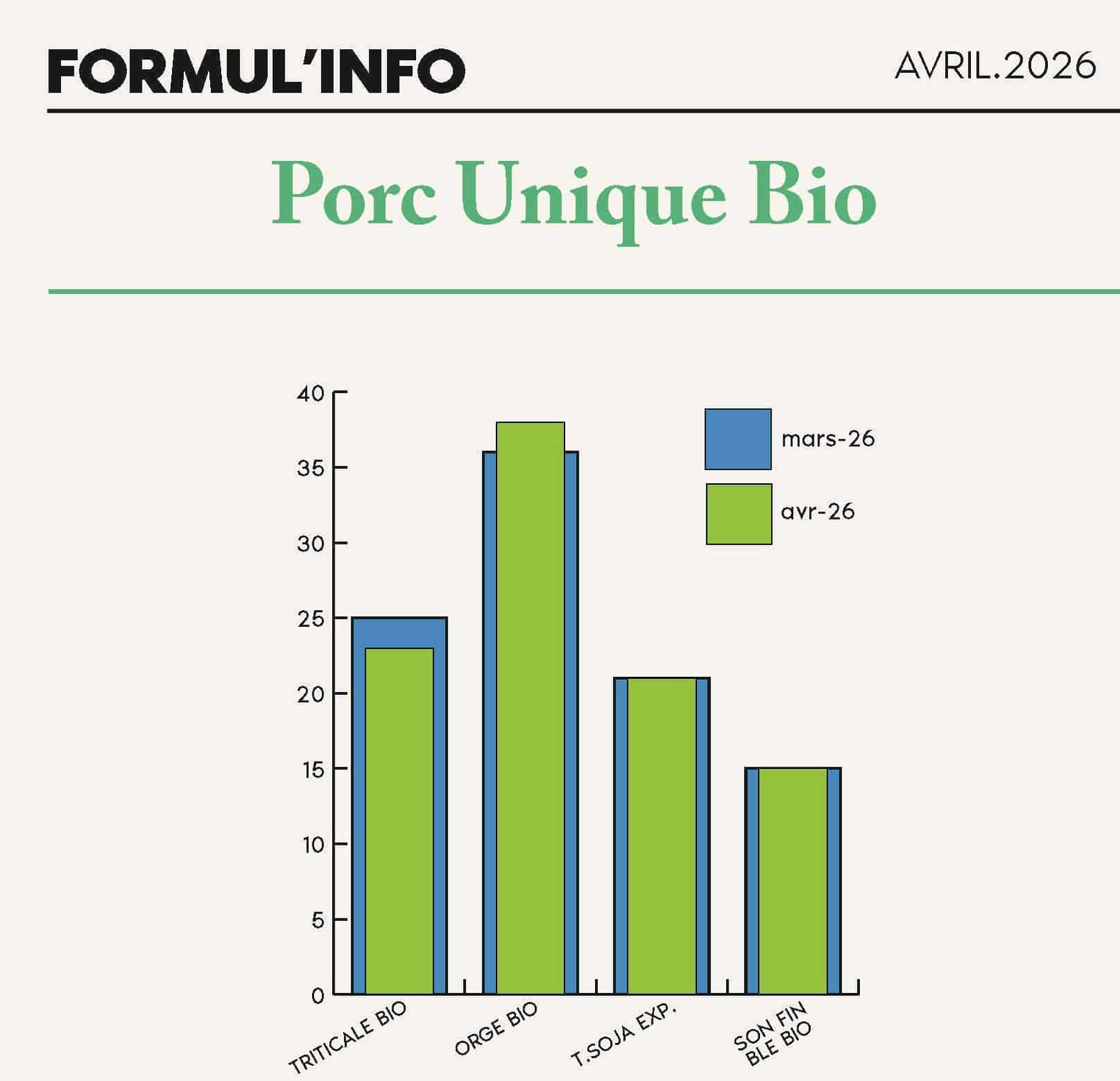
The formula remains largely stable. There is a slight change in the proportions of barley and triticale, which vary by 1 to 2 percent.
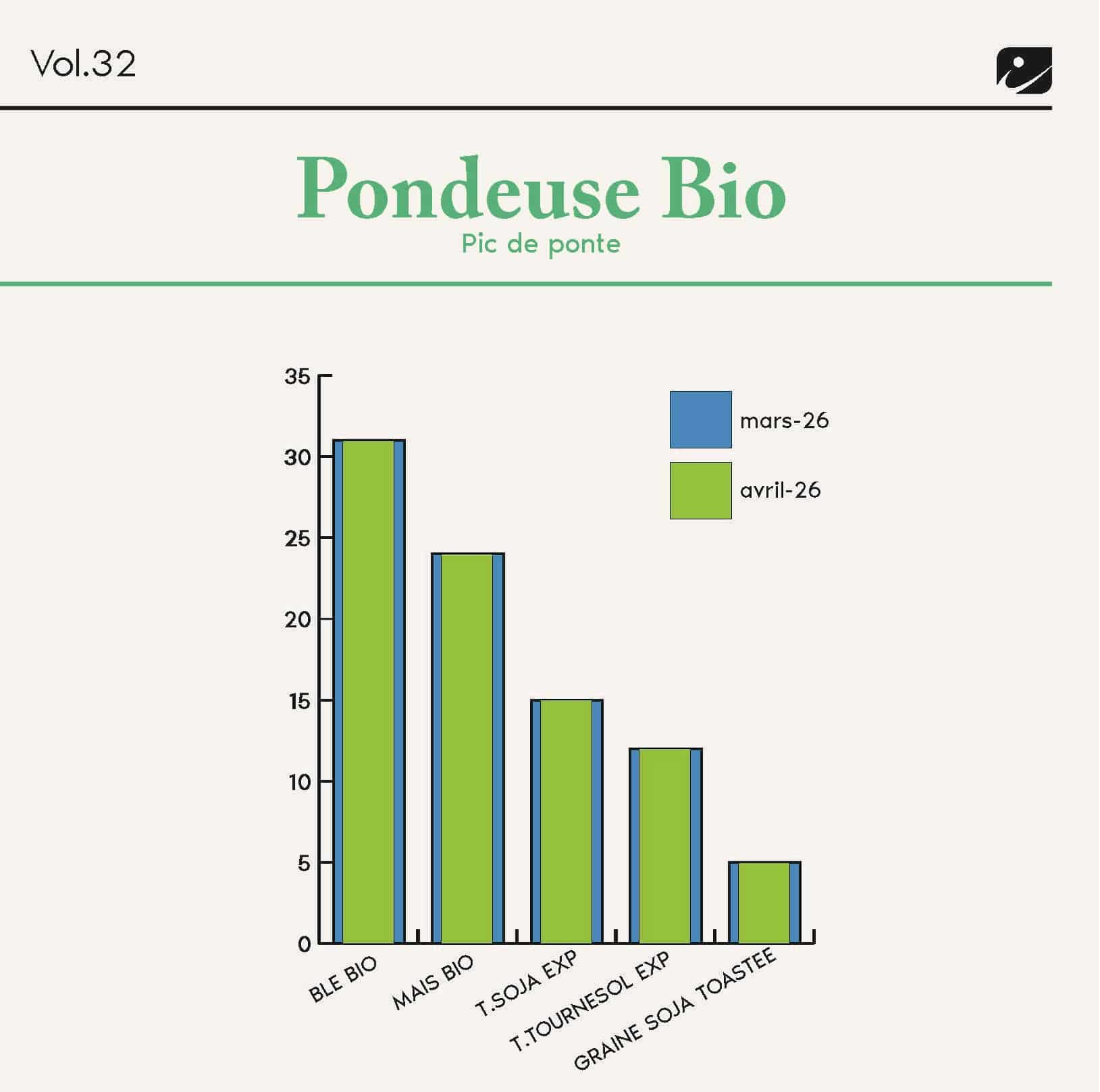
The organic laying hen feed formula remains perfectly stable between March and April.
Chicken:
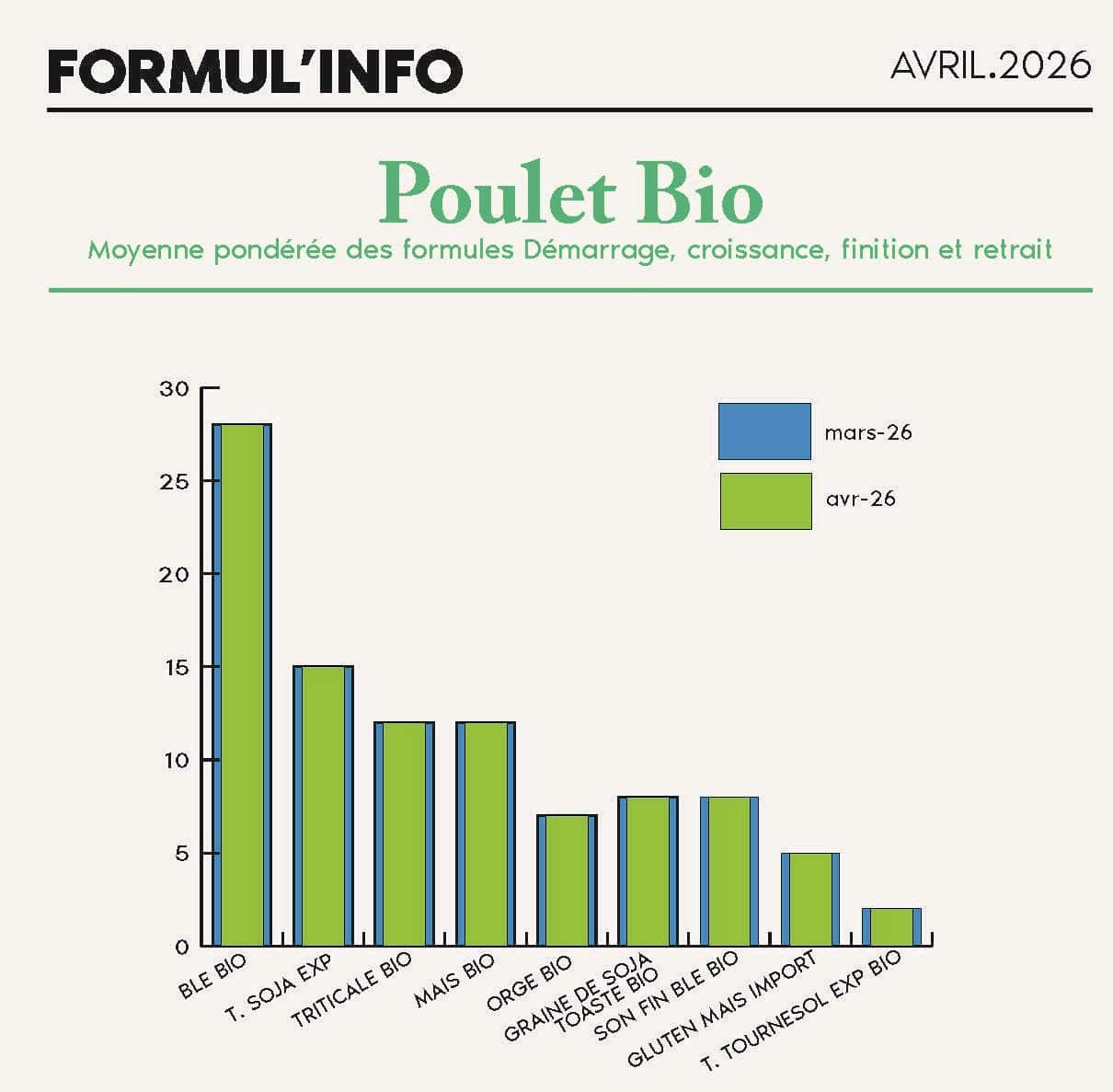
Sales of the organic chicken product remain very stable between March and April.